Showing posts with label Feminism. Show all posts

Tuesday, July 7, 2026

GLORIA SWANSON and HER RED CARNATIONS


Gloria Swanson was known to carry a red carnation when she was out in public or appeared on a television talk show, so that flower became an associated icon. She would give them as little gifts. In 1981 during an interview with Barbara Walters, she said she had first started doing so in order to have something to do with her hands instead of smoking a cigarette. She exercised, limited her diet to health foods, and credited taking care of her health for maintaining her beauty without cosmetic surgeries or procedures.

C 2026 Mistress Manifesto BlogSpot  All Rights Reserved including International and Internet Rights.


Wednesday, May 6, 2026

AGNES KEYSER'S PARENTS WERE NEW MONEY PEOPLE ACCEPTED INTO THE PEERAGE : SHE DIDN'T WANT HIS MONEY BUT THE KING NEEDED HER

In Queen Victoria's time, there were about 1500 families who dominated London Society based on their pedigree rather than their money. But room was being made for the likes of the Keyser's. Excerpt page 55 : ... "By the 1890's stocks, shares, and money-making skills pushed into the social limelight a whole range of families backed by purchased land and money which had not been inherited... 

Edward Albert, Prince of Wales, finally became King in 1901 when his mother, Queen Victoria, died.  There was much anticipation because the people wanted change. It was well known that he was involved with Alice Keppel, but well, it was always said that the King had "democratic tastes" in women.  And he was involved with both Alice Keppel and Agnes Keyser

Excerpt page 75:  "The Prince of Wales association with Agnes Keyser developed at a much slower pace than his with Alice Keppel, and was not to increase in intensity until after he became King and his health entered its steady decline.  Alice would never lose her lace as maltress du roi (mistress of the King), but the monarch's need for Agnes evolved as a loving friendship.  It is likely too, that Edward was a regular visitor to the London house of the Keyser sisters at 17 Grosvenor Crescent, which the family leased from the Duke of West minister.

Exactly when and where the Prince of Eales and Agnes Keyser met for the first time in 1898 is difficult to tell. The prince - with Alice Keppel - was to visit the former Keyser home of Warren House on a number of occasions and knew the Keysers well, but it is likely that they first met in London through mutual friends, within the network of Anglo-Jewry which vacillated at the edge of Edward's court.  In particular the Bishcoffsheims and their relatives the Goldschmidts, the Sassoons, the Cassels, and the Wernhers, were all members of the princes' court circle. Many of their friends were to be further linked with Agnes and her new royal admirer through the advent of the South African War.

Agnes and her sister, Fanny, were volunteers in nursing service and relief organizations.

Here is how AI (using Wikipedia) defines the South African War:

The Second Boer War (1899–1902) was a major conflict where the British Empire fought two independent Boer republics—the Transvaal and the Orange Free State—for control of South Africa. Driven by imperial expansion and the desire to control gold resources, Britain utilized a massive army to overcome early Boer guerrilla tactics, concluding with the Treaty of Vereeniging, which annexed the republics.

Causes: The conflict arose from disputes over British "Uitlanders" (foreigners) in the gold-rich Transvaal, political friction between imperial expansionists (e.g., Lord Milner) and Boer leaders (e.g., Paul Kruger), and the aftermath of the 1895 Jameson Raid.

British Tactics & Consequences: To counter guerrilla tactics, the British implemented a "scorched earth" policy and established concentration camps for Boer civilians, causing over 26,000 deaths from disease and malnutrition. This sparked significant controversy in Britain.

Outcome: The war was the longest, most expensive (200 million pounds)
and bloodiest war for Britain between 1815 and 1914, costing over 20,000 British lives.

C 2026 Mistress Manifesto  All Rights Reserved including Internet and International Rights


Saturday, May 2, 2026

AGNES KEYSER : "SISTER AGNES" WAS A NEVER MARRIED CHILDLESS WOMAN WHO LOVED THE AGING MONARCH KING EDWARD VII AND NEED NOT TAKE A DIME FROM HIM

Agnes Keyser as "Sister Agnes"
painting by Miss Maude Coleridge which appeared in tabloidish The Tatler, 16 September 1914.
image from Wikipedia

AGNES KEYSER
1852 – 1941

Raymond Lamont-Brown authored this book, which compares and contrasts the two acknowledged mistresses of King Edward VII's last years. It serves as the primary reference for this month's posts.

The magazine illustration above shows Agnes as a nurse, and called "Sister Agnes."  However, she had no nurse training. She could be called nurturing but commanding. The King was ailing, obese, in pain.

On the book cover here, Agnes is the one depicted to the top left, and Alice Keppel the bottom left. Lamont-Brown's book is about the last two loves of this King, who had devoted most of his life to pleasure whenever possible, during the last few years of his life.  

How to describe Agnes Keyser? One might suggest that she was so unlike the other mistresses of Edward Albert, the Prince of Wales who became King Edward VII, so unlikely to be a mistress, that she's remarkable in that way ... There is some speculation that he and Agnes had a love that was devoid of sexuality.  Though that may or may not be true, once again we make our way through the  mistress stereotype, that the relationship is about sex.

I want to start by posting what I learned about Agnes Keyser from reading the book I featured last month: Catherine Arnold's.


The King and his wife lived at Sandringham House which is today the preferred family home of King Charles III, but his wife felt herself to be a prisoner there because she was left home while the King was openly in a relationship with Alice Keppel. Everyone seemed to know their place in the scheme of things, for, according to author Raymond Lamont-Brown, that the King's entourage for his coronation  included other mistresses such as Daisy Greville, Countess of Warwick, Lillie Langtry, and Sarah Bernhardt. 

There is also the question of just how many children the Prince of Wales, who became King Edward VII late in life, had begot outside of his marriage. Some of the people who attended the coronation may have been the "bratlings" he had fathered.

The King was an aging, arguably sickly, portly, 58 year old when he met Agnes Keyser.  She, at 46 years old, was a prim "bachelor girl" (spinster) who had never married or had children. Her family was not quite to-the-manner-born as some of his mistresses had been, but they were rich and influential enough to have Agnes presented to Queen Victoria at court. Her parents were at least partially of Jewish heritage. Her father was a member of the Stock Exchange. She was an heiress and had the independence and freedom that most women of her era did not. It has been remarked upon that from an early age she did not much like women but she loved men. Speculation is that her own nanny was too harsh with her.

Agnes probably met the king in 1899.  The Boar war broke out and she and her younger sister, Fanny, set up a nursing home for officers.  Just officers. The King, called "Bertie." set up a trust to finance this nursing home.  Several of the donors were also of some Jewish descent. It became King Edward's Hospital for Officers.  She was thus called "Sister Agnes."

Now, from the Raymond Lamont-Brown book, we learn that both women likely got involved with the King around the same time in 1898.  In the mid 1800's in the United Kingdom there was a man-shortage. Around 20 percent of the women who were born about the same time as she never married. Not only that but the age of first marriage for women of her class had risen to 26 years old. But this isn't offered as an explanation for her resistance to marriage, which had been expected of her.  "She found the social ideal of women subjugating herself to a man in matrimony abhorrent." The Englishwoman's Review summed up her attitude perfectly when in its columns it averred that 'the higher a woman's nature is, the more likely it is that she will prefer to forgo marriage altogether, than surrender herself to a union that would sink her below her own ideal.' Because Agnes Keyser was wealthy she was never considered a social failure.

Furthermore, as a spinster, Agnes Keyser was far more independent than a married woman, being able to act as a trustee, an executrix, or an administratrix should she wish to, and to enjoy a franchise in parish matters.  Agnes Keyser became a member of the Victorian group of women who slowly developed new lifestyles which in time would influence all women. And as a terrible snob, Agnes intended to be somebody.  (Excerpts from page 45.)

The King had certainly no need of Agnes' money and she was not one to expect his financial support or generosity. But of course, what I do wonder, is if having two very different women in his life at the same time was necessary for the King to have all that he wanted and needed, if the two of them had qualities that balanced each other. For Agnes, if she thought of her as competition or not, the other woman was not the King's wife but Alice Keppel, a flamboyant personality who loved riches. Edward had been a Prince in waiting for the throne the majority of his life and his mother, Queen Victoria, was formidable. His wife, Princess Alexandra of Denmark, and he, had done their duty in bringing children into their world, but it was not a true love match. Divorce was impossible but who knows if Alexandra ever thought about it. She prevailed in the end having had the man in her life longer than any other woman.

C 2026 Mistress Manifesto  All Rights Reserved including Internet and International Rights

Thursday, October 23, 2025

GEORGE STERLING'S ROLE IN NORA MAY FRENCH'S UNHAPPINESS ? : GEORGE WAS NEVER A GOOD CANDIDATE FOR HUSBANDING

While reading this book, I thought about George Sterling, a man who made his living and supported his wife through selling land for building, you could say a real estate agent or maybe a developer, of Carmel-By-The-Sea. Carmel is in the Monterey Bay area south of San Francisco and after the historic San Francisco earthquake many unhoused people made their way to Monterey. 

George Sterling was torn because he had entered into a conventional marriage with his wife, Carrie, but was not capable of being a faithful husband. Rather he was a womanizer and alcoholic. I see him as a man out of control of himself. He was so torn up, especially after Nora May French commit suicide by cyanide poison while an ongoing guest in his marital home, that - eventually - years later - he too commit suicide. At least that's a notion. Maybe he was a bit tortured because they'd had an affair and he was not free to be with Nora, but somehow I don't think this man, who seems to have been ruled by his emotions, would have divorced Carrie and married Nora. There was, in my opinion, much more wrong with him and his life that he couldn't bear.

But of fascination is that George had business connections that meant that he was one of the early members of the Bohemian Club, which is now the mysterious and controversial Bohemian Grove, a big boy's camp that has attracted world leaders and Presidents of the United States to its get-aways from the world. Rumors persist that Satanic rituals occur there but I personally have no idea if that's true. It seems to mainly be a men-only club for the very rich, some of whom probably were in secret society type fraternities when youth in college.

What George Sterling wanted was to be a literary person, a poet, to attract such persons to buying land and building homes in Carmel, to put that village on the map as an artists colony. Although his marketing and public relations had that effect, he actually wasn't successful selling property to people who had unsteady or inadequate income. How he hoped literary luminaries like writer Jack London would settle there.

Many of George's friends blamed Nora's death as his undoing. Or women in general. He and his friends attempted to pick up "Bohemian" women on the poetry scene in San Francisco and George was not the success at it. Further, Nora seems to have been given way too much credit for being a "femme fatale." While reading about these men and their ways, I couldn't help but think they were immature and how stuck the women at that time who married men like this were.


C 2025 Mistress Manifesto BlogSpot
All Rights Reserved including Internet and International Rights

Friday, October 17, 2025

ABORTION IN THE TIME OF NORA MAY FRENCH : AMERICA AT THE EARLY 20th CENTURY

CRIME READS - NORA MAY FRENCH - GILDED EDGE   

This essay, entitled 'Reclaiming the Legacy of Nora May French, the Pioneering Poet Made Into A Femme Fatale By Mediocre Men and California Mythology, is by Catherine Prendergast, author of 'The Gilded Edge."

Nora's second abortion was by pill bought over the counter. Her boyfriend was the married Harry Lafler (Henry Anderson Lafler). She wrote him a letter as the abortion pill began to take effect. 

Excerpt : Her parcel of pills still unopened, Nora sat in the kitchen and read the letter from Harry. It was everything she had hoped it would be, sweet and passionate. She felt her will, so resolute earlier that evening, begin to falter. She tried to imagine a life with Harry and a child: Harry, walking their unfinished floor at 3:00 a.m., rocking their baby to sleep in his arms as she dozed. A beautiful baby perhaps with Harry’s dark wavy hair but her own spooky eyes. She and Harry could be like Dante and Elizabeth Rossetti, living for beauty and art, while their child rambled happily around the house.

It didn’t take long for this fantasy to collapse. Harry Lafler was still a married man, and despite his promises, Nora did not believe his separation from his wife would ever progress to divorce. In truth, she wasn’t even sure if she wanted it to. She and Harry were bound by passion and recklessness, not responsibility and reality. She was his carefree muse, something ethereal and magical, not an ordinary woman who could get in ordinary trouble. He would recoil from the sight of a swollen belly and bolt from the rigors of fatherhood. She would be left raising a baby on her own—a complete disaster. Even if in 1907 women worked outside the home, rode bicycles, and published poetry, nobody looked favorably on an unwed mother and her bastard. Her child would be seen not as the product of love but rather as the punishment for sin.

Thursday, October 2, 2025

BOHEMIAN POET NORA MAY FRENCH : AN EARLY 20th CENTURY LOVE GONE WRONG STORY OF MONTEREY CALIFORNIA : THE CYANIDE LOVE TRIANGLE


NORA MAY FRENCH
 1881-1907
photo from Wikipedia
identified as Nora May French as photographed by Arnold Genthe


The Gilded Edge by Catherine Prendergast is a primary reference for this month's posts.

Was it actually a LOVE TRIANGLE? 

I think the subtitle of 'The Gilded Edge' which is 'Two Audacious Women and the Cyanide Love Triangle That Shook America' is a bit unfair. 

The three persons were: Nora May French, a turn-of-the-century poet who was talented and esteemed, but who seems to have disappeared from American Literature, and a young woman though she had emerged as a brilliant poet before her death. Carrie Sterling, married to George Sterling, whose own ambitions were not literary but who, through her husband, met and tangled with some of those, such as writer Jack London, who the Literary Canon well knows, as well as their women. Carrie often played hostess and was the wife who would stick with a bad marriage for a long time since there was social status to be mindful of. George Sterling, who was instrumental in the establishment of Carmel as an artists colony through his role as real estate agent, but who would much rather have made his living as a poet himself; My take on George is that he was alcoholic and a womanizer and not all that well psychologically. But was Nora May French to blame? 

George went out of his way to try to convince people to move to Carmel, a small town in the Monterey Bay, south of San Francisco. He encouraged group photos that made some of these artists and writers look cozy and implied they were moving there or buying real estate as a marketing strategy but not the whole truth. The big names never bought in and he struggled for acceptance by them in part because his talent as a poet never equaled theirs. History may be a bit more fair to the struggling George than this author, for he was a founder of the Bohemian Club, which is now the notorious Bohemian Grove.

These three people were not in a triad and they did not commit suicide together, but I bet because of the title of the book you thought so.
 Although it's complicated, I wasn't convinced that the suicide of Nora or that of George's wife, Carrie, or the eventual suicide of George was entirely motivated by relationship frustration or loss of love. Rather it was also about money - the natural need for it in this material world - and especially so for women at a time when few could support themselves; imagine any poet at any time thinking their poetry would bring in money enough. George Sterling was a founder of the Bohemian Club which endures to this day as the Bohemian Grove, but he eventually went broke.

To her credit, author Catherine Prendergast, did some difficult investigative research to bring us Nora May French, who did indeed commit suicide by cyanide in 1907, and whose poetry - and very mood - inspired copycat suicides! We know that because some of those who commit suicide did so with copies of her poetic verses on them!

Nora's end at the age of twenty-six made her infamous. Headlines remarked on her talent and beauty, calling her witty, spirited, and talented. So the media as it existed decades ago implied there was not just a shame but a mystery. There was a lot of blaming among the men who had affairs with her and it seems Nora was pregnancy prone too.

Why is so little about Nora May French preserved?  Was it because of her sad end or because she was a woman? Prendergast sees the difficulty in this research a problem of sexism. 

As I read this book from cover to cover, I couldn't help but think about the way marriage was about the only way a woman could survive back in the day. Nora May French was not the first or last woman to ever have sex before marriage or an affair with a married man/men, but she needed marriage. Society was not set up for most women to be independent of men or to earn their own money and support themselves and Nora's experience with paid employment was unfulfilling and exhausting. What any woman with creative talent, such as a writer who needed to write, was a patron or a husband rich enough to support her so she would not have to work for income herself and could keep writing. He had to be the type who didn't want a conventional wife and be someone who loved the arts and might find some prestige in having a poet as a wife..

Was Nora so foolish to have sex without marriage and also not have used contraception?  Was that "Bohemian" of her? We don't know if she had access to contraception or not. This story includes abortion. At this time in the United States when abortion rights have been cut in some states, I think about how hard it is was to be a woman with no financial support when a having and raising a child born outside of marriage. The child would be as socially unacceptable as its mother.

Nora had two abortions unmarried, at a time when a woman might, with the right connections to the right doctor, have a "therapeutic" abortion at a hospital, or brew an herbal potion that would cause miscarriage, or understand that some over-the-counter women's remedies sold at the pharmacy were intended to do the same. One was a surgical horror and the other by pills. In both cases she risked not only the ruin of her reputation but that of her family. It seems she very well may have been pregnant again when she suicided.

Nora May French came from a "good" family with ties to some historical persons such as a founder of the Wells Fargo Bank on her mother's side. However, it seems that her father, the son of an Illinois governor, experienced some failures, possibly embezzling money while at a job at a college and, with drought and a stock market crash in 1893, the family fell into poverty quickly. Nora was sent to live with a relative (ironically named Uncle Cash) who might have led her to a good marriage. She lived with him in New York and he sent her to the Art Students League but she had a indiscretion with a man and was sent home. She became the black sheep of her family.

Though she might be on the marriage market without a dowry or any expectation of an inheritance, while working as a seamstress - a lowly profession - in a leather factory, she did promise to marry a young man. 

Excerpt page 54: " ... Working in a leather factory had taken its toll on her body and spirit, Her fingers had grown dull from working the needle into the leather, her eyes strained in the low light, and she found herself too tired at night to think of lifting a pen. Her mind began to slow down, sitting among women who had nothing better to talk about than when they would get married and leave. One morning she woke up and realized that she had become one of them. She couldn't wait to get married and leave.  (Note that she was sewing leather gloves.)

Then Lee proposed. At first, she hesitated She told him everything about herself, how she was happiest wandering in the woods, how she lived to write poems, and how she would never be just an ordinary girl, if that was what he wanted..."

The engagement brought her back into approval of Uncle Cash who sent a money present and her parents relaxed that she would have a husband. However, Lee soon complained of how much time she spent writing and reminded her to prepare to be a wife and mother such as learning to cook. Female relatives of his also pressured her to conform.

In 1904, a month before the wedding, she broke the engagement. At the age of twenty-three she decided she may as well be a spinster. She sent her work out and her poetry was published in newspapers and literary journals. Nora gained a literary reputation. 


Once on the West Coast, a little older but still in her twenties, and already a published poet, Nora was involved in the Bohemian lifestyle, perhaps an experimental lifestyle at best, in which artists, writers sought a break from convention. That said, she got involved with married men and doing so did not prevent her from having sex or heartbreaks.

There was also another man who was interested in marriage with her for a while - or so it was discussed when she became pregnant - retired British Army Captain Alan Hiley of Santa Cruz, California, who was married, and a muse.

She had to live with someone, if not her sister who did not like San Francisco, then a couple such as Carrie and George Sterling. George was connected to the Bohemian lifestyle of San Francisco and also the founding of the Bohemian Club, now called The Bohemian Grove. Instead of just staying  as a house guest of the Sterlings until she married, the end of another opportunity for marriage turned her into more of a permanent guest. It was there at their house that she took the poison.

While Nora did have an affair with George, and he mourned her, he was not her only man.  And while she did use pills to miscarry, she did not take her life immediately after that. Nor was Nora the womanizing George's only affair while married. Carrie Sterling had lost any expectation that her husband would be entirely devoted or satisfied with her. Carrie had thought her marriage to George was advantageous and had to have been disappointed in his character.

Nora commit suicide in 1907 by cyanide.
Carrie commit suicide in 1918 by cyanide.
George commit suicide in 1926 by cyanide.

These suicides were years apart. I just can't call this a love triangle and am not convinced Nora was the reason for the suicides of Carrie or George.

For me, the story of the San Francisco Earthquake of 1906, when estimates are that up to 80% of that city was destroyed, and the resulting influx of refugees into Monterey, and how that influenced the real estate sales was of interest too. People were, like today's homeless, living in tents with their families, sometimes in the backyards of relatives or friends. 

Which brings up my question about Carmel-By-The-Sea and just how "Bohemian" and unconventional it was. You don't have to be artistic or "Bohemian" to be unhappily married or to commit adultery or to have affairs these days. Rather I think the people in this book were stuck in their circumstances including class and status expectations that they be married. Then, there is always the issue of money.


C 2025 Mistress Manifesto 
All Rights Reserved including Internet and International Rights.

Saturday, February 22, 2025

LILLIE LANGTRY : A NEW HUSBAND INFLUENCES HER TO SELL OUT OF THE HORSE AND RACING BUSINESS


Excerpt pages 247-248

In 1899, when she was forty-five, she married Hugo de Bathe. He was an odd choice for her.  He was nineteen years younger than her and he had no money to speak of. His main attraction seems to have been his father's title and Lillie would become Lady de Bathe. She was able to go ahead with the marriage with a clear conscious, because her troublesome first husband, Edward, had died of a brain hemorrhage in an insane asylum just over a year earlier, ending the speculation over the validity of her Californian divorce.

Hugo persuaded Lillie to sell her riding stable and horses, because he didn't think it was proper for a woman to own racehorses. The couple lived on Jersey for a time, but when Hugo volunteered for army service in the Boer War and left for South Africa, she returned to London and resurrected her stage career. Initially, she was just as successful as before, but her appeal was slowly waning. She tired vaudeville in New York and she made a film. In 1907, her marriage to Hugo finally paid off. Hugo's father died and she became Lady de Bathe....


It's my suspicion that Lillie supported her younger husband and that they both went their separate ways without considering divorce. In this way during the Victorian Era both would have been considered more respectable.   

I have a question for you: Have you given up a business in order to keep a relationship?


Sunday, October 27, 2024

MARIA CALLAS : LA TRAVIATA : 1958 in LONDON

For those of you unfamiliar with opera, I offer you this link to the three acts which were adapted from a play by Dumas by Verdi.   ENO.ORG - OPERAS LA TRAVIATA


About this time Maria, born in 1923 was in her mid-thirties, still wanted a baby, was married but not happily and would face a difficult divorce.

Saturday, October 26, 2024

THE RAGGEDY END OF A RELATIONSHIP WITH ARISTOTLE ONASSIS and AN OPERA CAREER: MARIA CALLAS' LIFE ENDS AT ONLY FIFTY THREE


This post wraps up the coverage of Lyndsy Spence's devastating book about the life of Maria Callas though you'll have to read all the details I could not possibly include in this month's dedication to the opera star. 

Betrayed by Aristotle Onassis, Maria Callas accepted that it was over with him. He married Jacqueline Bouvier Kennedy and a month later he called her and expected her to pay attention to him. She ignored him and phoned her and then he threatened to drive his car through the gates of her building. So she saw him but remained firm. Though the former First Lady and the Greek Shipping Magnate had a contract that she would spend two nights a week with him (implying sexual agreement) he expected Maria to have sex with him. Maria gathered her strength to consistently reject him.

Callas's career continued to be blotted with interruptions, changes of mind, and various reasons to cancel. She saw that she could not return to the stage because the public would always expect more of her, not less. An extraordinary tragic actress?  Would she shine in a film of Medea? 

A fortune teller told Maria that she would die young but would not suffer. (Her body double's costume caught fire and it was reported it was she! She was also firm in her opinion that her mother and sister were leaches when they called to express concern after hearing of the incident in the media.) For a film she lost weight to go down to130 pounds and also got an eye lift and did her best. Her film debut in 1970 was well received out of respect for her more so than the film. 

It seems that Maria Callas had a harsh awakening but had gained her perspective.

She told reporters that year that Aristotle Onassis had been an addiction and it was over.  Onassis turned himself into the victim and said Jackie made him unhappy and so their dynamic changed and Maria now called what she had with Aristo a platonic passionate friendship. However she was escorted by famous men and gained her more modern and independent outlook, Maria could not give up on the man. Jackie had spent 20 million dollars the first year of their marriage and Aristo was starting to hate his wife, but Maria, who had been with Aristo for nine years, gave in to him again. The marriage contract with Jackie allowed him a mistress!  But when he took up with Jackie again, Maria took an overdose again. She always claimed these were accidental overdoses.  This time the press got word and it was printed in Paris that she had overdosed. She sued to preserve her reputation.

Perhaps at this time Maria Callas' was at the height of her fame. Now the opera star said that she and Aristo were best of friends. Privately she was conflicted about him. She saw that he had a split personality. He said he wanted a divorce from Jackie but was also bound by their marriage contract so he cut her Jackie's allowance and started treating Jackie as he had Maria. Jackie made a life for herself in America as a response.  Maria wanted the world to know how badly Aristo had treated her though.

In 1971 she finally filed for divorce in Italy as a new law had been passed. It was rumored she would marry Onassis, who was also supposed to be filing for divorce. Maria Callas had finally grown into herself, dressed as she wished, wore pants and joked about her fat legs and wore her eyeglasses. Her self-acceptance - self-love - made her stronger to reject Aristo.

She knew some wanted her to come out of retirement and she hesitated and rejected one offer after another for stage and to make films.

She did sing at the Royal Festival Hall in a London Farewell Concert.

You can watch it here.  And as I watched it, I could not help but think that it was almost impossible to believe this woman had lived through so much. Beautiful, graceful and gracious, entirely professional, I can only wish that at some moment in time before her death in 1977, that Maria Callas had a sense of how far she had come and how much she had accomplished. The people around her tormented the perfectionistic Diva but one hopes that she learned to love herself.

Missy


C 2024 Mistress Manifesto BlogSpot   All Rights Reserved including Internet and International Rights.

You may find other posts by searching for Onassis or Kennedy in the Google Blogger search feature!


Wednesday, October 16, 2024

MARIA CALLAS : METAMORPHASIS : THE END OF MARRIAGES andTHE BEGINNINGS OF A DIFFICULT RELATIONSHIP WITH ARISTOTLE ONASSIS

In her early thirties, soprano opera star Maria Callas finally lost the weight  that had plagued her and became fashionable. On stage she wore gorgeous costumes but it was now the time in her life to dress for her fans, the international public. In 1954 Maria went to a Swiss clinic where she accepted a new type of weight loss medical treatment; Special shots to stimulate the weight loss and injections into her thyroid. She lost 140 pounds and developed an hour-glass figure. She also had her teeth capped and surgery to slim her upper arms and lift her eyes. She had spa treatments like massages and facials. But the more fascinating fiction was the rumor that she had swallowed a tape worm in a glass of champagne out of desperation!

Then Maria Callas went out shopping and bought in excess. She possessed hundreds of dresses, hats, and shoes.

She was recording. She was performing. Her new beauty attracted to her even more men fans. Yet she was very married, and by the Italian way of thinking, however her confidence improved with her appearance, however "flirty" she might be at times, she was off limits.  Even if her marriage was one of "convenience" and her husband was rumored to go for fat prostitutes?

By 1949, Maria may have reached her most commanding and demanding phase, the Diva phase, you could say. She was having issues with her contracts, lawsuits had started to fly, and she was cast in the press as not just difficult, but a tyrant. However, she was also doing interviews and performances on television. Would we in our feminist consciousness think she was too demanding? Hadn't she earned the right to defy her husband as agent?

Her reason for living was singing but, some realized that her voice was in decline. After years of training and exercise, the sour or shrill note was noticed. In the 1958-1959 contract era, Maria Callas was fired from the Metropolitan, the opera company in New York that had been her goal in coming to America all those years before because she hesitated to sign the contract. However, she made appearances in many other cities in America and Europe and these productions might not have been the Met, but they were sold out.

And Maria Callas still wanted a child. Time was running out. She spoke of remarrying after her husband died just as rumors that she was infertile swirled. She was married when, after a performance, she met Aristotle Onassis and his much younger wife, Tina, who invited them to sail on the Christina, the Onassis pleasure ship. This first invitation was declined. Aristo's marriage with Tina had been breaking before he met Maria. Tina had two children with Aristotle but was bored with the jet set life style and her husband's abuse.

A society hostess, Elsa Maxwell, got herself into the situation, encouraging the two towards each other, and told Maria to take everything in life that was offered her. Meanwhile, Onassis' attitude towards love was that all women eventually had sex for money - so to speak.  Not outright cash but in exchange for jewelry, gifts, travel. He pursued Maria, claiming he was married in name only. She was flattered to be pursued by a man with such ardor, passion and intensity.  Maria began to have serious problems with her husband who she now considered to have been pimping her - as her manager. As confrontations with her husband increased, Maria was also not taking Aristo's calls. However, she well knew that the Italian attitude laws regarding divorce put her at a terrible disadvantage and then there was her career and reputation both as a woman and an artist.

The Principality of Monaco figured into the romance. The tiny principality might not have been officially owned by Onassis but he owned the casino and so the income into Monaco. And his boat, the Christina, named after his only daughter, was docked in Monaco.

Another invitation to cruise came from Onassis, who had the famous British Winston Churchill and his family aboard the Christina. This time Maria Callas and her husband, Giovanni Battista Meneghini, accepted the invitation.

Maria Callas and Aristotle Onassis had things in common. They spoke Greek together. She laughed at his jokes. They dined alone. The two of them went to a holy site of the Greek Orthodox church, the religion they both were raised in, knelt together, and received a blessing: Maria would consider this to be like a marriage. (Though not divorced, her Italian marriage was not recognized by the Greek Catholic Church.) Then, it was clear to others on the Christina that Aristo and Maria were having an affair. Tina Onassis used the situation to her advantage in asking for a divorce from Aristotle. But, had Maria misunderstood her seduction?  Aristo had told her of his sexual exploits and at the end of the cruise he gave her a bracelet which was his way when he was through with a mistress.

Ten years younger than her husband, but still an "older man," Aristo became Maria's obsession. Back home in Milan she immediately asked her Giovanni for a divorce. Since she was an American citizen, Maria wanted to have a fast American divorce, which, at the time, was fastest in the state of Alabama. (Tina Onassis too would consider Alabama.) Maria's husband was not going to let her go easily.  He showed his character by using threats of International shame to keep her married to him. To the public she stated that Onassis had nothing to do with the divorce. Maria's horrible mother threatened to put a curse on her, again not concerned with her daughter's happiness, only that Maria continue to earn and keep her family in money. As rumors of the affair became international, Maria threatened to kill her mother.

Was Ari the real reason for demanding a divorce - finally - when her marriage had been a disappointment to her as a woman? According to Lyndsy Spence, whose book Cast a Diva, is the prime reference for my posts this month, here at Mistress Manifesto BlogSpot, Maria did become pregnant by Aristotle Onassis.

I'm aware from other books that this has been a controversial question.  Some suggest that Maria had a baby in secret and the child was adopted.

In 1959 Giovanni Battista Meneghini did file for a legal separation from Maria Callas.  The Italian law was in his favor and if she remarried without an Italian divorce, she might be considered a bigamist. Italy had been of great importance to her opera career. She worried that if she had a child, her husband would take it from her. Onassis wanted her to have an abortion and it was rumored his wife, Tina, had abortions as well. Maria had wanted a child for years and so it must have been crushing when, around her fourth month, she either had an abortion or a miscarriage.

In Monaco Arstoi and Maria and been photographed dancing together. She announced that they would marry, which he dismissed as a joke. By 1961, Onassis had gone on cruises on the Christina without Maria but also with her. There were opinions that she was loosing her voice, but could any opera singer go on for decades? Onassis became verbally abusive of Maria, and it was her weight and her looks, the things she had so little confidence because of, that he picked on.

It occurs to me that Onassis was one to enjoy the pursuit of a woman and that Maria seems to have been far more serious about him than he was to her. Did he ever actually love her?

I will continue on in the next posts about Maria Callas and Aristotle Onassis...

C 2024 Mistress Manifesto BlogSpot   All Rights Reserved including Internet and International Rights.

You may find other posts by searching for Onassis in the Google Blogger search feature!


Tuesday, October 8, 2024

MARI CALLAS BECOMES FAMOUS - NAZI OCCUPIED GREECE and THE LIBERATION CHALLENGE HER PERSONALLY : HER ATTITUDE ABOUT LOVE

From Chapter 3 and 4 of Lyndsy Spence's audiobook... My notes!  (In this we learn about Maria's take on love and marriage.)

Maria Callas, living in Greece, was already considered an artist and local star in 1943 when she sang at a benefit concert. Recognize in the streets, there was constant speculation about what man would become hers. She dealt with a seriously dysfunctional family, the demands of her superiors and the jealousy and gossip of her rivals at the opera. It is known that she had a romance with a man who she had known for a year, the son of a multi-millionaire who wined and dined her. Maria, whose sister was a Mistress being Kept by a man who supported her and her mother as well, did not want to feel obligated to return the "favors" in a sexual way. Her career was the most important thing to her. Like all of us, Maria was living through history, and in the Spring of 1944 the Nazi occupiers of Greece owned the National Opera. As she succeeded there were rumors that she was involved with an officer or a collaborator. She was in a terrible position. Sleeping with the enemy could put any woman in danger. Any woman living in that time and place was in danger of rape. The Greeks thought the German women were whores and the Germans were thought by the Italians to be barbarians... In tears due to accusations, she threatened to resign from the National Opera. But in October of 1944, came Liberation when the British and American troops came into Greece and Greece-based groups like the National Liberation Front and National People's Liberation Army took part in getting rid of the Nazi Germans. Dating but nothing serious, Maria, her family - most people, faced one of the worst winters in history.

Despite her career, the budding star was in danger of starvation. Having money didn't help because it was worthless. She saw a man die of starvation in front of her. National Opera members who had been collaborators were executed. Women who were collaborators - or suspected to be - had their heads shaved and were raped as punishment... The National Opera was closed. Then the Communists came into the mix and threatened to kill Maria and her mother and sister.  At one point they were down to a box of beans.

So there was Maria, who had struggled with eating and her weight, starving and afraid. Her mother found a job working as a Greek-English translator. But they were living in the "red zone" a dangerous area, and it was easy to be accused of something and pay the price, fair or not.  They lived without heat or electricity, behind drawn curtains, and burning rags for some heat during that brutally cold winter.  Finally a boy disguised as a vendor came to the house to bring Maria out of the "red zone" and into the British white zone. She left and the boy returned for her mother.  In the "white zone" she was able to wash in hot water and eat.  Though in 1945 peace was somewhat restored half a million refugees came into Athens.

Because Maria Callas was raised without a father in her life, there is speculation that this lead to her looking for a father figure in her romances.  She did begin a romance with an opera star who was about fifteen years older than she but denied going to bed with him.  He was married and already had a mistress as well, with whom he had two children. She was on friendly terms with both his wife and his mistress!  Sexual freedom was not a problem for him but she said she was an old fashioned woman.  In an ethereal way, Maria thought love was a kind of purification of the soul.  When he asked her to be his mistress, Maria declined. As she saw it a man might have more than one woman but a woman only had one man... She said she was not about to take him from two women and that she had to have to love with head and heart and only then could have sex. Her mother had a far away husband and a lover.  Her sister was a mistress. What was to happen for Maria? Despite the limitations that this friendship-romance presented, it ended badly, suggesting that Maria and the man were emotionally passionate.

When Maria was demoted at the National Opera and took a pay cut, something jealous rivals at the opera wanted, she secretly plotted her way back to the city of her birth - New York - and sought to make her dream of performing at the Metropolitan Opera true.

She had been secretly writing with her father since 1942 and when he became an American citizen, so did Maria. So, while she accepted the National Opera of Athens and signed a year contract with them in May of 1946, in August she went to the American Embassy where she was recognized as an American.  Still, she had to fund her travel somehow. So she leased a theater and did a farewell concert to earn the money.  She left with a couple dresses and not a cent in her pocket.  A loan from the United States government paid for her travel.

C 2024  Mistress Manifesto BlogSpot  All Rights Reserved including International and Internet Rights

Wednesday, October 2, 2024

MARIA CALLAS : WE REVISIT THE GREATEST OPERA SINGER - DIVA and MISTRESS OF SHIPPING MAGNATE ARI ONASSIS

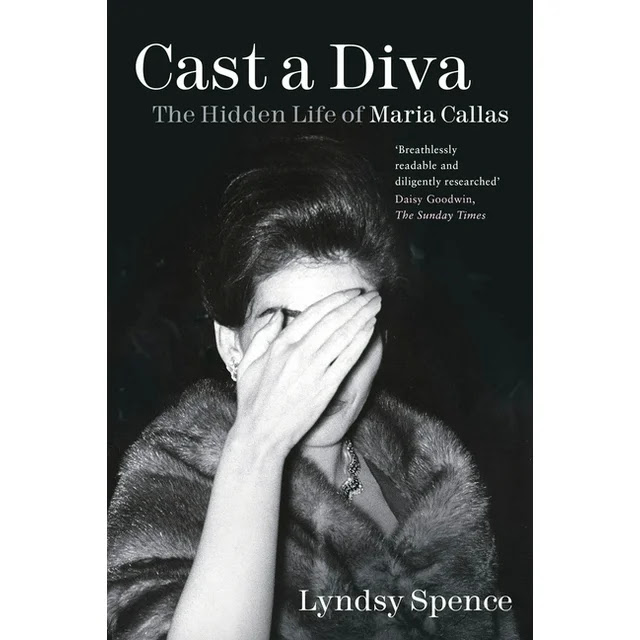
Mistress Manifesto, as a Google Blog, began in 2009 and, before I got up to speed, I chose Maria Callas as my Mistress of the Month. These days I feel that this dynamic woman deserves more and better coverage, especially as actress Angelina Jolie chose to portray her in film. So I will repost a couple items from the past and continue on with the book Cast a Diva by Lyndsy Spence, which will be the primary references for this month's posts.

Maria Callas was a famous and esteemed opera singer, some say the greatest, called The Queen of the Opera during her career, who had a soprano voice and three octave range; She is also known for her dramatic vocal interpretations. She was  born in the United States as an American to Greek immigrant parents but thought of as Greek because of her heritage and because the she went back to Greece with her mother and sister as a pubescent teen and there began her voice training. (Eventually she would give up her American citizenship and become a Greek citizen again while desperate for a divorce.) As a teen, she had entered talent contests and appeared on amateur hours, was made to lie about her age, and borrowed records from the library to imitate other opera singers.

Beyond a stellar career, Maria Callas is known as the Mistress of the Greek shipping magnate Aristotle Onassis, a reportedly fiery relationship. Did she want to marry Ari? I've always heard that to be true and it's something we will certainly explore. Onassis was married, divorced, and went on to marry the ultimate prize perhaps, the widow Jacqueline Bouvier Kennedy, wife of the assassinated United States President, John Fitzgerald Kennedy, though they divorced famously as well. Maria had also been married, to an older man who took advantage of her and had been divorced. Maria was Onassis' mistress before and, other books have stated, during his marriage with Jackie. 

Cast a Diva - The Hidden Life of Maria Callas by Lyndsy Spence, is not the first book I found interesting by author Spence. She also wrote a book about Doris Delevingne called The Mistress of Mayfair, which I reference here when I elected Doris to be Mistress of the Month in August of 2018. This month however, I will be posting based on chapters as I'm listening to the audiobook while also taking notes. Cast a Diva is reviewed on various book sites on the Internet as presenting Callas as a feminist icon; wonder if I will agree with that notion? That said, Maria Callas has also been associated with tragedy - personally and publicly.

Image from Wikimedia
I think Maria Callas was distinctively beautiful.

MARIA CALLAS

Maria Cecelia Sophia Anna Kalogeropoulos

1923 (New York) - 1977 (Paris)

The early years of the life of Maria Callas were not easy or simple and had a profound effect on her psychology. Her parents were Greek immigrants to New York City in 1923. Maria's pharmacist father had career difficulties as an immigrant and her parents did not get along. It's suggested that her father was a womanizer or that her mother, "Litsa" thought herself and her family to be above his in status. Maria's mother decided that her two daughters were essential to her survival and the three of them went back to Greece in 1937, basically ditching her husband and their father. So Maria had little to no parenting by her father from that point. Her husband, Giovanni Battista Memeghini was an older man, and so was Aristotle Onassis. I can't help but wonder if she was vulnerable to older men because her father was so distant.

Maria's mother was emotionally abusive to her and there were serious questions about her mental health with suggestions that she was unstable, a narcissist, had borderline personality disorder or even schizophrenia. A brother had died and her mother wanted another son so Maria was an unwanted daughter. Maria had an older sister, Yakinthi, and their mother forced the girl into a relationship with a man, to become a Mistress to someone who would not only Keep her but financially help the whole family. This man supported all three of them for some time. This sacrifice on her sister's part also lead to a tangled and difficult relationship between Maria and her sister. With career success, Maria Callas found herself supporting her mother, and contributing to the support of her father and sister as well. They cared little for her personal happiness.

It could be said also that Maria's mother believed in her and promoted her as a child and had the ambition that Maria would someday support them all and free her sister from a dutiful pairing. Mother recognized that her daughter, Maria, had exceptional singing talent. Her mother begged for singing lessons for Maria, demanded she give her all to practice, and she allowed Maria to go without any education past about the eighth grade. No doubt in my mind is that this lack of education and constant focus on vocal training instead of academics was part of the deep insecurity Maria felt. In 1939 Maria Callas began to study at the Athens Conservatory and the perfectionist Maria had a fabulous career for some time.

Perhaps though, it was Maria's weight, along with the fraught relationships she had with her mother and sister, that caused the Opera Diva even more emotional issues as a young woman. The Diva was self-conscious of her myopia and acne, and it's said that she only felt loved while singing. Yet, Maria tapped into her wild range of emotions and feelings as an opera singer, and was unafraid of having an "ugly" voice if it was appropriate for the mood of a song. It was her ability to interpret the drama of a scene that, along with her exceptional voice, brought the audiences to tears and ovations. She said she wanted her voice to reflect "the atmosphere and thousands of colors."

Maria Callas married a rich industrialist, Giovanni Battista Meneghini, and was married for a decade from 1949-1959 to this husband who acted as her agent and manager. The Italian divorce laws at the time would make it near impossible for her to escape this marriage and this man's machinations. Like her family, in particular her mother, he proved to be only interested in her career and the fame and money that could buy them a good life.

There was Maria and then there was Callas, a private woman and a celebrity. She disagreed with feminism and the end of gender roles. "I failed to fulfill myself as a woman" she said, referring to her desire to have a child never fulfilled. 

During this month, I will not focus on the details of Maria Callas' opera career, though I realize that many a opera fan or Maria Callas fan is interested in those details. I assure you that the book does follow her career closely. For our purposes here, we want to focus on her relationships with men, and how it is that she chose to remain faithful to the unfaithful Aristotle Onassis. How is it that she was considered his mistress?  Was it simply because he would not marry her?  Because she clearly could support herself well but he was richer? Was it his attitudes towards women in general, which most modern women would find to be revolting? Her relationship with Aristotle Onassis, whom she called "Aristo" was an extreme example of emotional and psychological abuse and domestic violence. Years went on in which an Italian divorce was not granted. Both Aristo and Maria at times lied to the press that they would marry and then claimed they were joking.

Maria Callas died at the age of fifty-three after a life typified by the highest highs and lowest lows. It's quite possible that using a certain drug illegally - though is some parts of the world it was legal - meant a slow suicide. She had withdrawn into her apartment, was estranged from her family and husband, and after her death her mother, sister, and husband would split her clothing and furniture among themselves.

Stick with me as we learn together about the life of this stellar personality and talent, through the vision of author Lyndsy Spence!

C 2024 Mistress Manifesto BlogSpot   All Rights Reserved including Internet and International Rights.

You may find other posts by searching for Onassis in the Google Blogger search feature!


Thursday, August 15, 2024

VICTORIAN ERA ENGLAND AND IMPROVEMENTS FOR WOMEN'S RIGHTS


 Page 309 :

".... All the great courtesans of the eighteenth and nineteenth centuries treasured their autonomy and guarded it jealousy, an impropriety which marked them off, more than most anything else, from their 'respectable' sisters. This was so even though the position of women - particularly married women - in the mid-nineteenth century was better than it had ever been.  It is hard to imagine, at the beginning of the twenty-first century, the profoundly radical changes to the position of women about the Divorce Act of 1857, and the Married Women's Property Act of 1882. Before the latter a married woman could own no property (although among the very rich, pre-nupital settlements often circumnavigated this), nor even control any earnings she might have (this was changed by legislation in 1878), and she had the legal status of a minor, on par with children, criminals and the insane. Although prior to 1857 she could be divorced by her husband, she herself was debarred from filing a divorce suit - or any other kind of legal action - against him. Most critical of all was the fact that the husband had complete control over the children, who like his wife, were his legal property. A woman had no redress. In the case of her adultery, for instance, a husband could - and invariably did - simply take her children away from her for good.

The Acts of 1857 and 1882 changed all this.  As well as divorce and other law reforms, the nineteenth century saw many other campaigns by women to improve their circumstances - the campaigns for the vote, for the expansion of job opportunities, and for better educational rights all belong to this period..."


ARE YOU A FEMINIST?


Monday, August 12, 2024

HOW COURTESANS TOOK ON MALE PRIVILEDGE FOR THEMSELVES

One of the fascinating aspects of Katie Hickman's book about courtesans, which focuses on the women of England who came into this lifestyle, is her reportage on other aspects of a courtesan's lifestyle. She reports on finances, on contraception, and on the character and personalities and values of the successful courtesan.

Wilfrid Scawen Blunt moved on from his fraught relationship with Catherine Walters in Paris.  When it seemed that his association with Catherine would cause scandal, his boss removed him to another diplomatic post.  He was considered an eligible bachelor and even became the unsaid fiancee of a young woman whose parents approved of the match but, reminded of his love for Catherine and seeing how it compared for his feelings for this other woman, he was unable to make the proposal.

These excerpts from pages 308 and 309 have much to say:

"In many ways Blunt's behavior was not at all unusual for a man of his class and times.  The ability to separate what he himself would call "practical romance" from either idealized romance or sexual conquests was a perfectly acceptable way for a man to conduct his affairs, so long as he was discreet: and Blunt who later quite consciously made the decision to marry for money, saw no shame in it. ..."

***

He was aware of the double standard - one for men - another for women.

***
Page 309:  "It goes without saying that when women tried to emulate this masculine behavior it became an "immorality" for which society could not forgive them.  The only women who were in some measure outside these constraints were courtesans.  The penalties melted out by society could not touch the demi-monde (although some would say that being part of this shadowland , was the penalty) and as a social group they were thus almost uniquely free.

It was not just sexual chastity that was the issue here, but also, by extension, a woman's whole autonomy. Blunt, who in his way, was in many ways a forward thinker about women, never really blamed Catherine for her promiscuity, or even for the fact that she accepted money for it (although he did not like it).  His blame was for something altogether more subtle, something that he himself could barely articulate: the fact that she could accept him as a lover, but still desire to keep her independence from him. This was the really tormenting fact for him about their liaison. And it was this which, in his eyes, made her 'unvirtuous.'


Ask your self this question (and maybe you'll want to leave me a comment) :  Do you compartmentalize one relationship from another and why?


C Mistress Manifesto BlogSpot  All Rights Reserved including Internet and International Rights

Saturday, November 4, 2023

ASKING FOR IT : THE ALARMING RISE OF RAPE CULTURE -- AND WHAT WE CAN DO ABOUT IT by KATE HARDING : MISTRESS MANIFESTO BOOK REVIEW

We first must understand what RAPE is!  Then we must be sure that our brothers and male friends understand that too. Anyone we go on a date with, anyone we are having a sexual relationship with, should understand that No is No, even when foreplay has gone on. They should know that permission is required every time and permission cannot be given by a woman who is passed out or asleep and that being in a steady relationship or married does not mean that either partner can never say no.

Of course we should also be "careful" but is being "careful" basically limiting, if not ruining, your life?

If you're like me, when I first heard of rape, when I was a teen, I thought it was horrible, almost unimaginable. I thought it was always physically violent and only imagined the scenario of sudden attack by a stranger who was waiting in an alley, in the be with a brute who used his strength, that she had to fight off the man, or try too, or was too scared to and froze and "let it happen." My experience in life was limited and my parents never brought up the possibility.


ASKING FOR IT: THE ALARMING RISE OF RAPE CULTURE -- and WHAT WE CAN DO ABOUT IT was published in 2015 and is not outdated. Kate Harding is angry, as we all should be.  We might call her "a radical voice," but until there is no more rape on this earth, isn't that the voice that is necessary?  This book should get you angry, rile you up, and make you proactive.  If it doesn't maybe nothing will.

Was there anything in the book that I thought was over the top?  Yes.  It was an attack on academic researcher Deborah Tannen * who has written about how men and women seem to differ in their way of communication. To be fair, I have always hated the Men are from Mars, Women are From Venus books, the idea that we cannot escape gender especially because it seems it is always the woman who has to figure it out, change her ways, to get along with the man. I do think that there are genetic differences between those born female and those born male, and lots of variation as well. I personally do not know how much is socializing or cultural when it comes to expectations of gender, how we communicate, and so on. I think Tannen was trying to show us how we talk to each other - not just men and women but mothers and daughters too - so we can recognize ourselves if it fits and communicate better.

My feminism which idealizes equality for women clashed with reality. So sometimes we have to look at what is, how things are, even as we try for our ideals.

I doubt Tannen was ever coming up with apologies for why men rape (and I do face it that men sometimes get raped too, but usually by other men) and I do think her books are worth reading. 

As Harding points out, in our culture men get away with it, and that is perhaps the biggest issue, for if there is no punishment, or if a woman's experience is trivialized or she is blamed and the man gets an easy sentence, other men figure they can too. She brings up well known gang rapes; I frankly started thinking castration really is the remedy though it does not take a penis to rape and a violent person who still has arms and legs will use them.  My heart is broken for the women who have been, and for those who love them who are also affected. Rape is done by those who hate a woman or women.

C 2023 Mistress Manifesto BlogSpot

If interested in Deborah Tannen's body of work:   Deborah Tannen  Her books include "You're Wearing That?" - "You're The Only One I Can Tell" - "I Only Say This Because I Love You" and others.