Showing posts with label Paris. Show all posts

Monday, July 20, 2026

GLORIA SWANSON AND THE "BANKER" JOE KENNEDY : HE DID HIS RESEARCH AND WAS INTENT ON SEDUCING HER ... SHE LET HIM ...

Not only because he desired Gloria Swanson as a woman, but because he wanted this actress, perhaps the most famous and successful in the silent film era, to work for his studio and make money together.

Joseph P. Kennedy was the youngest bank president in the United States in 1914 when he was only twenty-five years old.  He had graduated from Harvard and was vividly aware of the discrimination against Catholics and the Irish. He went on to make a fortune in the stock market, and in real estate, and he wanted to add a Hollywood studio and movie making to his wealth portfolio. Though he had many a success in business, reading Axel Madsen's account, I couldn't help but think that he was overly confident that he could also succeed in Hollywood. He went after Gloria Swanson in a manner that would suggest that he had done some research and knew that she was in debt because of her own efforts to produce her own movies.

It's easy to vilify Kennedy but it would also seem that Gloria Swanson didn't resist his seduction.
Circa 1928  Joseph P. Kennedy invited Gloria Swanson and her husband Henri de la Falaise to come to Palm Beach, Florida, where he'd bought a house for his family. He was welcoming and so was Palm Beach society. Calling cards, invitations, parties in her honor, teas, receptions, and business meetings too. He was very proud of knowing her.  He also endeavored to get Henri out of the way. 
 
Excerpt pages 174-175: 

In retrospect, Gloria would remember the tact with which Joe made the offer that could make her husband distinct his own man and, if Henri was clever, rich as well. In her autobiography, her smile o gratitude to Joe when the two men came to a quick verbal agreement immediately precedes her account of how the next day she and Joe tumbled into bed. Her indebtedness to Joe no doubt softened, in her own eyes, the adultery that, since the kiss on the train, she knew was inevitable. In a reversal of the story of the biblical David, who sent Uriah into the most dangerous part of the battle so he could possess Bathsheba, Joe was ready to heap gold on the man he wanted to cuckhold.

Kennedy biographers would wax saucily on how Joe eliminated, with some permanence, the coveted movie queen's husband, but neither Gloria nor the Kennedy memorialists could explain how Joe was able to offer Henri a Pathe directorship in January when he didn't become a Pathe advisor until February. Gloria was, of course, writing for posterity, and by having Joe's generosity and Henri's opportunism preceded her surrender, she softened her image...

Henri would leave no memoirs of his own, and we can only speculate on whether it all passed over his head or whether he knew he was defeated and went for the proffered brass ring. ... he might have been the first to sense he was on a sinking ship and that his wife's impending adultery set him free, morally, to concentrate on enriching himself.

Joe's infatuation was hard to ignore. Others saw how he was dazzled and drawn by Gloria's presence, how his own success - Palm Beach, Gloria, the lot - all made him live beyond the rules, how she exerted an attraction that went beyond physical beauty.


Excerpt page 193 : ... (Circa 1928) ... (Joseph P. Kennedy) took over Gloria's life.  He arranged everything, including Henri's departures. The lovers had two distinct lives: one with each other when Henri was in France, another when the marquis was in town. Joe arranged his own existence so as to be in Hollywood when Henri was not and in the east when Gloria's husband was home.

C 2026 Mistress Manifesto BlogSpot  All Rights Reserved including International and Internet Rights.

Thursday, July 16, 2026

GLORA SWANSON IN JAZZ AGE PARIS : YOUNG and RICH - READY TO REMARRY - PREGNANCY and THE NIGHTMARE ABORTION

Gloria Swanson in Jazz Age Paris : She wrapped a movie called Madame Sans Gene, which was being touted as another success and galas for the opening were being planned in New York City. Starting in January 1925 she would be making $7,000 a week. She had met the man who would become her next husband, French nobleman Henry de La Falaise, reputed to be a millionaire himself. He wasn't close. Her net worth was higher. He was alarmed by her spending; A costume party in which guests danced to three bands, for instance, or that she had bought gifts for every member of the cast and crew of the film. She was mixing with the most famous and successful creative people in Paris.

Excerpt page 109: News of Gloria Swanson's sumptuous wrap party reached American gossip columns, together with rumors that the screen idol had gone totally French - indeed, that as soon as her divorce became final in January, she would marry a French Millionaire and quit the movies. ...... She discovered she was pregnant.


Gloria  had signed the morals clause in her contract. Her divorce from Herbert Somborn was not final and she dreaded being known to have had an affair by giving birth "very prematurely." She couldn't marry Henri de La Falaise asap and become a bigamist. She decided having an abortion was the only thing she could do. And she decided to do so without telling him.  It would not be her first abortion. For she had been aborted during her first marriage to Wallace Beery. She called a journalist, the only person she thought she could trust to explain her dilemma and find a doctor for her.

Excerpt page 109 : ... When she said she saw no other solution but an abortion, he agreed. "You and Henri are both young," he said. "You have all the time in the world to have another child." The words stung. When she was seventeen a nurse had told her the same thing. She had judged Wallace Beery harshly then, had never really forgiven him, and now she was ready to do the same thing.


Andre (Davin) arranged the abortion while Henri arranged a civil wedding.  As it turned out, she was given permission to legally marry Henry earlier than she had thought and as it turned out the abortion had been arranged for the day after she had the permission to marry!

She married Henry and then Andre went with her to the abortion doctor. She was given ether (put her under before the surgery) and afterwards she was "surprised she could walk." She went back to their hotel suite at the Plaza Athenee and went to bed, awakening with a serious fever. 

Except page 110: By nightfall she was drenched in fever. Henri called a doctor, who had her hospitalized. Each time she woke up. Henri was there. She told him the truth; he told her she had tetanus. He didn't say that such infections were often fatal and characterized by violent spasms and rigidity of many or all the voluntary muscles. Nurses tried to make her stand up; her feet folded under her. Finally, she had her first meal sitting in a wheelchair. Everybody applauded when she began moving her toes.

Of course, the truth of her illness was kept a secret. 

Excerpt page 111: The return to America was a triumph. Gloria's marriage to a nobleman and her long battle with death had provided Famous Players-Lasky/Paramount with millions of dollars' worth of free publicity, and Zukor and Lasky pulled out all the stops. Adoring crowds nearly smothered the far from recovered movie star, but it was out of the question for Gloria to lay low.

C 2026 Mistress Manifesto BlogSpot All Rights Reserved including International and Internet Rights.

Thursday, November 20, 2025

SARAH BERNHARDT'S MEMOIR : MY DOUBLE LIFE : ON PROJECT GUTENBERG

GUTENBERG ORG : SARAH BERNHARDT : MY DOUBLE LIFE 

Ma Double Vie (My Double Life) was published in 1907.  However, scholars don't think it's the most accurate account of Sarah Bernhardt's life. Still, I always think it's important to consider what a person has to say about themselves because who knows a person better?

I think it's interesting the way the book is described in Project Gutenberg: "The book chronicles the extraordinary life and career of the renowned French actress, emphasizing her personal experiences, challenges, and the pivotal moments that shaped her into a theatrical legend. The memoir touches upon themes of childhood, resilience, and the performing arts, offering readers an intimate look at the woman behind the iconic performances. The opening of the memoir introduces Bernhardt's tumultuous early years, revealing the absence of parental care as her mother frequently traveled and left her in the care of a nurse. Bernhardt reflects on her childhood experiences in Brittany, her relationships with her family, and a serious incident during her infancy that required her mother’s hurried return. The narrative sets the tone for Bernhardt's later struggles and triumphs, detailing her feelings of abandonment and the longing for familial affection. As the opening progresses, it hints at her eventual journey towards becoming a prominent actress, interspersing her childhood memories with vivid descriptions of her environment and the care she received from her nurse."

Wednesday, November 5, 2025

YOULE VAN HARD : CRUEL COURTESAN MOTHER OF SARAH BERNHARDT? : DID SHE KNOW WHO SARAH'S ABSENT FATHER WAS? OR TELL MORE THAN ONE MAN HE WAS THE FATHER?

While reading Sarah by Robert Gottlieb I found myself speculating quite a bit and I realized something. The story of Sarah Bernhardt's childhood as the daughter of a Courtesan who was sent away to be raised by others or put into a convent, reminds me of other women I've featured here at MISTRESS MANIFESTO who were sent away... Do you know who I mean?

***

Not one of the 'Grand Horizontals', but a woman with a "protector" or a few, according to author Robert Gottlieb, Sarah's mother, Youle Van Hard - also called Judith or Julie Van Hard - was a pretty blond with some lazy charm but surprising strong willpower... And seems to have been too busy elsewhere to give a damn about Sarah. Though the story is not straight and there are varying accounts.

Excerpt page 3: "Youle conducted a relaxed salon to which a group of distinguished men gravitated, among them her lover Baron Larrey, who was the Emperor Louis-Napoleon's doctor and composer Rossini, the novelist and playwright Dumas's father, and the Duc de Morny, known as the most powerful man in France, who was Louis-Napoleon's illegitimate half-brother. It was Rosine, Youle's younger, prettier, livelier sister, who was Morny's mistress except when Youle herself was; in these circumstances it hardly mattered..."
.
"Youle (Sarah's mother) and Rosine (Sarah's aunt) had come a long way. Their mother, Julie (or Jeanette) Van Hard, a Jewish girl of either German or Dutch in origin, had married Maurice Bernard, a Jewish oculist in Amsterdam. When their mother died and their father remarried, Youle and Rosine struck out on their own, first to Basel, then on to London and le Havre, where in 1843 Youle - perhaps fifteen years old - gave birth to illegitimate twin girls, both of whom died within days... 

Undeterred, the ambitions Youle quickly set out for Paris, her daytime occupation seamstress, her nighttime career a quick ascent into the demimonde."

It seems to me that a mother's remarriage would not necessarily be the whole story on why two teenagers left home knowing they'd have to support themselves and found that way by becoming courtesans.

Rosine became a courtesan in Paris, while sister Henriette made a decent and respectable marriage. And then Youle was pregnant again, this time with Sarah. It is understood that Youle simply was never much interested in Sarah, while she did take interest in the next child she gave birth to, another girl, who was also illegitimate. (Youle would eventually have three daughters and it is understood that she tried to introduce Sarah into her world.)

Youle's disinterest in Sarah might have had something to do with who the father was. The best candidate?

It's implied that the Duc de Morny might have been Sarah's father.

There was a young navy officer, surname Morel. There was some money intended for Sarah from Morel or his family - eventually.

Sarah's father might have been a college student. 

The father's name on her birth certificate, Edouard Bernhardt, is also a confusion. One wonders if Youle just made up the name. (It is awfully close to the name Bernard.)

Sarah had memories of being a young child who was sent away to a small village in Brittany where a nurse substituted for her mother as a kind of foster parent. (Eventually she and the nurse were moved closer to Paris.) Sarah would write that her father had been in China for a couple years, which sounds to be something Youle - or Sarah - made up to explain the absence of a father to Sarah. Her mother was only nineteen when Sarah was three, and her youth and circumstances might be partly to blame for being uninvolved in her daughter's life. But, be it that an Edouard Bernhardt was the name given on her birth certificate as her father, or not, there was no consistent presence of a father figure as she grew up. At best she might have had a few visits from him at school or understood him as interested in her education and religion. In her memoir, 'A Double Life,' Sarah gave credit to her father for her attendance at an elite convent - ie. boarding school.

It is just as likely, in my opinion, that Youle may have told more than one man he was the father of her child, or come up with the money for Sarah's boarding through her own efforts. (Which could include investing money she'd been given or paid.)

Though author Gottlieb doesn't suggest this, it comes to me that perhaps Youle's rejection of Sarah, which caused her so much emotional pain throughout her life, while being clearly capable of loving her next born daughter, might have been due to something more horrible than not knowing which patron was Sarah's father. For Youle, according to Sarah, was, in my word choice, abusive. It was reported by the wife-author of one of Sarah's lovers that Sarah said her mother was not just distant but disapproving and cruel and had the power to wound her. 

However, Sarah herself reported that during her childhood, both her Aunt Rosine and her Aunt Harriet were somewhat in her life and it occurs to me that, however judicious in his reportage author Robert Gottlieb has, we may not get too close to the whole story.

C 2025 Mistress Manifesto BlogSpot All Rights Reserved including Internet and International Rights

Sunday, November 2, 2025

SARAH BERNHARDT : DAUGHTER OF COURTESAN YOULE VAN HARD : TRANSFORMED HERSELF INTO A WORLD FAMOUS ACTRESS AND A NATIONAL ICON OF FRANCE KNOWN FOR HER OWN "SCANDALOUS" LIFE

SARAH BERNHARDT  

(1844-1923) 

Baptized Sarah Marie Henriette Bernard but born Jewish

Eventually Called The Girl With The Golden Voice

I've had Sarah Bernhardt, who was considered the best actress of her generation, on my list of future subjects for some time. My search for books in English that are well regarded lead me to this one by author Robert Gottlieb, which is primary reference for this month's posts, along with some interesting web sites and YouTube videos. Gottlieb states that Sarah herself spun stories and that some of the people who wrote about her had agendas and so, perhaps, it's not possible to know the true or whole story. But he does try.

I think Sarah Berhardt had a hard life but like many of the people profiled here, she made the best of what she had to deal with.

What surprised me was learning that Sarah's mother, Youle Van Hard, was a courtesan in Paris and that she was born illegitimate and unloved. I was also surprised to learn that after Youle took Sarah out of school, she encouraged her to become a teenage courtesan. Youle had three illegitimate daughters over the years. You could say she set her daughters up to be courtesans, and, though youthful Sarah did have patrons for at least some of the time in her youth, her younger sister reportedly became a prostitute and had an even harder life. 

Sarah's eventual successes may have begun because it seems that her mother, a patron, or most likely her birth father, were willing to provide an education for the girl. This was a time when women often went without an education. She took an early interest in acting and the theater and was educated at a good convent school and then a school for acting, but she was also born into a world where her gender - her family's situation - her class at birth - and her Jewishness came with limits. If you've been reading Mistress Manifesto, then you know that many a courtesan in previous centuries was also an entertainer. It was beauty, talent, and fame that attracted patrons and who knows what came first. Acting has become a respectable profession but it wasn't always. It was long assumed that any actor, any theater person, was living a scandalous life.

Sarah Bernhardt eventually became world famous - a celebrity - while also known for her 'love life.' I think that Sarah was expert at marketing and promoting herself, kind of like the way the singer-dancer Madonna, an expert at reinvention, has been. As an example, in her youthful days, Sarah posed with a hat that had a bat on top rather than a bird and took a coffin with her on her travels, and may have slept in it, which is sort of "ghoul school." Or was that just for a photo? I suspect that, if she took her coffin seriously, it was to remind herself to live life to the fullest rather than any darker reason such as thinking of herself as a Parisian vampire.

Sarah Bernhardt may have been known to love her independence. Was she a feminist? We can't say that just becoming an unmarried mother who has to support a child makes a woman a feminist. What went on in Paris, where courtesans had their place in society was one thing. Her behavior and attitudes were even thought to be part of an exaggerated or unstable personality. And maybe she did have some sort of breakdown at one point or another. 

Sarah Bernhardt was Jewish by birth but her father was Catholic. She, and her sisters, were baptized eventually. She was placed in a Catholic orphanage. But who really was her father? 

It wasn't common for a discarded orphan to leave a convent at thirteen years old and begin school at the Conservatoire de Musique et Declamation in Paris. Someone was interested in her education and her religion and wanted to give her a chance at success. Was that person her mother, who she believed - with good reason - didn't love her but who might have set aside some money? A father?

Excerpts from EBSCO.com: "Although she won second prize for tragedy in 1861 and second prize for comedy in 1862, she regarded the conservatory’s methods as antiquated. She left the conservatory in 1862 and accepted a contract with the national theater of France, the famed Comedie Francaise....In 1867, when Bernhardt was twenty-two years old, she became a member of the company at the Odeon, where she found definite successes in roles such as Cordelia in a French translation of William Shakespeaer's play King Lear (pr. c. 1605-1606), as Zanetto in François Coppée’s verse play, La Passant (1869), and as the queen in Victor Hugo's Ruy Blas (1838). Indeed, it was Hugo himself who called Bernhardt the girl with the Golden Voice (vox d’or)—a name that stayed with her throughout her life. Meanwhile, Bernhardt’s success was so immediate that she even gave a command performance for France’s Emperor Napoleon III. However, the Franco-Prussian War interrupted her rising career with the closing of the Paris theaters in 1870."

Like several of the women I've featured here, Sarah was a woman who inspired artists to portray her. Alphonse Mucha, whose posters are rather well known to this day, was a collaborator with Sarah. She posed for him and he also designed costumes, sets and jewelry for her. He even enjoyed a seven year contract with Sarah. Their professional relationship began when Mucha designed this poster for her, as she starred in the play 'Gismonda.'

These posters were all over Paris the first of January, 1895.

Also, like several of the women I've featured here, a flower was created and named for Sarah, which is a peony.

In Robert Gottlieb's book we learn early that Sarah was not exactly the most truthful person, though her lies, as I see it, were out of concern for her reputation, her career, and ultimately her ability to support herself and her son. He says on page one that she was "a complete realist when dealing with her life but a relentless fabulist when recounting it." One of the questions was what year she was born and where. The 1844 above is the earliest year. One page 2 he says, "There are three basic components to her experience of childhood, two of them enough to derail an ordinary mortal: Her mother didn't love her and she had no father. What she did have was her extraordinary will: to survive, to achieve, -and - most of all - to have her way."

Sarah Bernhardt's son, Maurice Bernhardt was well loved. Never loved by her own mother, Sarah was determined to love him. She had been sent away to be raised by others and then introduced to the world in which men gave money to women for sexual favors, although that's not to say that there was always the possibility that the relationships her mother had - or she had - entailed far more. For at least a couple years after the birth of her son, someone supported her. And she took lovers, even when someone might be considered to be far too old for her.

She was bisexual, had romantic affairs with both men and women and played both male and female parts on stage. She was creative. Besides her talent for acting and singing, she became an accomplished painter and sculptor. She was also a woman of business.

Sarah married one time, to a Greek military officer and actor ,Aristides, also called Jacques, Damala. They married in 1882 when she was in her late 30's He was a decade or so younger than her, they separated, but stayed married until his death in 1889. Damala was an opium and morphine addict and a womanizer who died of an overdose.

Perhaps she proved her strength of spirit and courage most during World War I. In 1915 she had a leg amputated but soon after she volunteered to perform for the troops, to improve moral, and insisted on being carried to the front lines. She appeared in propaganda films and patriotic plays
.

Gottlieb's book is short but sweet. I'm challenged to post what would be most interesting to my readers about this fascinating woman! Read on!

Missy

C 2025 Mistress Manifesto BlogSpot All Rights Reserved including Internet and International Rights

*** She was photographed sleeping in a coffin.

The following web sites and articles are reference or this post

MUCHA FOUNDATION ORG See other posters that featured Sarah Bernhardt and read about the artist.

EBSCO RESEARCH : SARAH BERNHARDT


Monday, September 29, 2025

MARIE DUPLESSIS : COMPOSER FRANZ LISZT A FRIEND : MARRIAGE TO AN OLD BEAU: HER INESCAPABLE DEATH

It was at a concert in Paris that Maria Duplessis met the Hungarian composer Franz Liszt.  They were introduced by the doctor who had Maria as a patient and had bogus cures he treated rich women with. But the doctor also had the composer's mother and ex-mistress as patients. (His mistress and the mother of his children was Marie d'Agoult.) She remet him as a guest at parties where he entertained, playing piano. He knew that she was terminally ill. And she wanted to go with him on tour, travel, be taken from Paris, which was a plan that never happened.

Excerpt page 49 : (From Liszts own reportage)

... she told me ... fifteen months ago: I shall not live; I am an odd gierl and I shan't be able to hold on to this life which I don't know how to lead and that I can equally no longer endure.  Take me, take me anywhere you life; I shan't bother you.  I sleep all day; in the evening you can let me go to the theatre; and at night you can do with me what you will!'


Maria was never one to depend on one man and for a woman in her position was wise about this. Because she went to London and met up with Count Edouard de Perregaux at the Kensington Register Office where a civil marriage was performed. She signed in as Mlle. Alphonsine Plessis of Paris, age 22. Though the couple gave an address in London, the two never did live together.  And she kept her surname Duplessis. She returned to Paris alone. But I surmise that perhaps this man granted her a great wish, to be a married woman before she died. 

Excerpt page 50 : With the help of a specialist she designed her own coat of arms, using part of the arms of her husband, and had them emblazoned on her carriage, her linen, and her silverware.

By this time, Marie was desperately ill. You could say she tried everything. She traveled to spas in Germany hoping have a cure. Her gambling was out of control, her visits to pawn shops numerous, both Count Gustav Von Sackelberg abandoned her as had the seven men who had shared her. Yet, she had possessions removed from her lavish apartment, renting other apartments to store furniture and valuables to prevent creditors from seizing them.*** She saw various doctors and ran up debt. Some of these doctors gave her advice that was useless really, recommending walks in nature and good food. We would say some of them were quacks but the fact is there was no cure for tuberculosis. 

Most of her friends left Marie to die alone. But three of her patrons did remain in her life to the end - men less significant in her life whose names do not appear here in this reportage.  At only twenty three years old, the woman who had inspired artists and writers, died on February 3, 1847, having been last seen in public weeks earlier. Among the few mourners were some prostitutes who she had helped financially. Count Edouard de Perregaux, her husband who had made a Countess out of Marie, appeared overcome with grief as the small funeral processions of those who had not abandoned her completely went to the cemetery of Montemarte where her grave remained unmarked for years.

FIND A GRAVE : MARIE DUPLESSIS

Missy here!  Thank you for sticking with me as we explored the life of Parisian Courtesan Marie Duplessis.  You can bring up archived posts by searching for the word Courtesan or Paris ... 

C 2025 Mistress Manifesto BlogSpot 

All Rights Reserved including Internet and International Rights


Wednesday, September 24, 2025

ELDERLY COUNT GUSTAV VON SACKELBERG SET MARIE DUPLESSIS UP IN LUXURY BUT OUTDID HER AS A LIAR

Marie Duplessis was an acknowledged liar. She was said to explain her lying by saying that the habit whitened one's teeth; her teeth were beautiful. What all did she lie about? I don't know. That blog post title is my opinion and here I speculate. 

The octogenarian Count Gustav Von Sackelberg met the 21ish year old Maria in the late fall of 1844 or early 1845. He said he wanted to "rescue" her from the life she lead and that she reminded him of his daughter... He claimed to be a widower, but the truth was he was married to a woman who had given birth to eleven children and would outlive him by eighteen years. He hid his wife by setting up Maria in an apartment across the street from where he lived with his wife... My guess is his wife knew all about him.

He was said to keep a list of all the virgins he had deflowered, a hobby of his. While Maria was no virgin, perhaps her delicate femininity and youth appealed to a fantasy he had. He wanted her for himself and was willing to spend to have her. Of all the men who provided for Maria, perhaps this man spent the most to keep her. And perhaps despite his sexuality, he was also influenced by pending death.

Besides the substantial apartment, Von Sackelberg bought Maria furs and jewels, horses, carriages and drivers, maid, cook, chambermaid, the services of hairdressers and other craftsmen who created and repaired and kept up, and allowed her to spend, spend spend. Gourmet meals and baked goods were ordered in. She was now eating sweets and drinking wine - Maria bought herself an expansive wardrobe - dresses, hats, and boots by the dozens, fine furniture, and much else. She claimed to spend about five hundred francs a day. Author Virginia Rounding mentions school teachers were paid about three hundred francs a year.

While he thought of keeping her to himself, Maria was pragmatic. What came first? Her acceptance of other men or his waning interest? She went out on the town and was seen at the theatre and concerts, still advertising herself as courtesans did. In the spring of 1845 Maria met the Hungarian composer Franz Liszt, who seems to have been taken enough by the young woman to care about her health.

I wonder if knowing she had not long fueled Maria's desire to have as much as possible and to live life to the fullest. When she met the composer she had about two years to live. 


C 2025 Mistress Manifesto BlogSpot 

All Rights Reserved including Internet and International Rights

Friday, September 19, 2025

MARIE DUPLESSIS


 Image is in Public Domain in the United States and provided by Wikimedia/ Wikipedia.

 Source : ÄŒeÅ¡tina: Obrázek Marie Duplessis, dámy s kaméliemi

Her extremely white, pale skin contrasted with her thick black hair.  
She was slim and not especially voluptuous.
In this image of Marie, the young woman might even be called "Tubercular."


Wednesday, September 17, 2025

MARIE DUPLESSIS MOVES INTO A BETTER APARTMENT : COUNT EDOUARD DE PERREGAUX

As Marie Duplessis moved up in the world, she attracted Count Edouard De Perregaux as a new love and perhaps he was the man she would come closest to becoming a Mistress of. His father was a financier who had been made a senator by Napoleon Bonaparte and was attached to the Bank of France. Edouard himself had been in the military in Africa and had earned a good reputation and inherited a sizable fortune but he also seemed to be determined to spend it and go into debt.

Excerpts pages 41 - 42 : He first encountered Marie at a masked ball at the Opera House in the rue Le Peletier, the tradition of masked balls having been revived there in 1839, such events being held every Saturday evening during the carnival time before Lent. Edouard and Marie were intregued by one another, and Edouard rapidly dropped another courtesan, Alice Ozy, in order to take up with her.

The apartment in which he installed her at 22 rue d'Antin comprised a drawing room, a boudoir, dining room and two bedrooms. The widows, and Marie's bed, were curtained with muslin and silk. Marie ordered her goods and services from a wide range of providers" wines from Madame Tisserant, just opposite in the rue d'Anton; cakes delivered by Rollet from the passage de l'Opera, glace fruits from Broissier, mint pastilles from Gouache in the boulevard de la Madeleine. Edouard would join in the consumption of all these luxuries, not stopping to make the calculation that by spending at the rate of three thousand francs a month, which was the absolute minimum Marie required to live on, he would rapidly use up his already depleted fortune. 


Marie felt flattered because Count de Perregaux seemed to be only interested in her but eventually also felt she had been deceived into thinking his fortune was substantial enough to last past her spending. He was estranged from his family and friends over his unrequited passion and extreme spending in order to keep her happy. She didn't cut him off completely but took on other lovers willing to keep her in the accommodations she desired. Considering his fixation on Marie, it must have taken some expertise to both disappoint him and keep him in her life.

At a time in which concerns about venereal diseases such as syphilis, for which there was no real cure, prevailed and during which contraception was limited, women especially paid the price for sexuality and pregnancy. But there was another disease that people feared and that claimed countless lives for which there was no cure and that was tuberculosis. Young Marie Duplessis must have realized she was seriously ill by this time as she was spitting up blood. 

Count Edouard de Perregaux is important to the story of this Courtesan though because towards the end of her life, as she was dying of tuberculosis, it was he who she married.

C 2025 Mistress Manifesto BlogSpot
All Rights Reserved including Internet and International Rights


Saturday, September 13, 2025

MEN "CLUB" TOGETHER TO SHARE THE BOUNTY OF THEIR FAVORITE COURTESAN MARIE DUPLESSIS

I wonder: is there a correlation between being a shopaholic and a Courtesan?

In 1842 Marie Duplessis might have been at the height of her earning power, if you choose to look at it that way.  She had many lovers and huge expenditures.

Excerpt pages 39-40 : ... Hippolyte de Villemessant tells how seven members of fashionable Paris decided to club together to purchase her favors, since she was so expensive to maintain.  To inaugurate this arrangement they bought Marie a present: a dressing table with seven drawers so they could each have one to keep their things.  In the early days Marie's management of her multiple lovers sometimes went adrift.  Shortly after Agenor de Guiche's return from England she made the mistake of taking him for a drive in the blue carriage which had been given to her by another lover, Fernand de Montguyon....  Subsequently she managed her affairs better and took care not to offend those who were paying the bills. Agenor was a t this stage what was known as an amant de coeur - that is, his and Marie's relationship was not a monetary transaction but a matter of genuine affections and mutual enjoyment...


This excerpt reminds me that anyone can attract many others at any one time but must somehow keep it all ... compartmentalized.  And be tactful. 

C 2025 Mistress Manifesto BlogSpot
All Rights Reserved including Internet and International Rights


Monday, September 8, 2025

MARIE DUPLESSIS : AGENOR DE GUICHE MAKES AN APPEARANCE IN THE TEENAGER'S LIFE AND SHE CHANGES HER NAME FROM ALPHONSINE PLESSIS

Grand Horizontals by Virginia Rounding is a primary reference for this month's post.

Excerpt page 20 : "The women of the uppermost ranks, the most desirable demi-mondaines, were also often referred to by the epithets grands or hautes - grandes cocottes, for instance, rather than simple cocottes. The pseudonymous writer "Zed" refers in his Le Demi-monde sous le Second Empire of 1892 to grandes abandonnees (The great abandoned ones) while Frederic Loliee in his Les Femmes du Second Empire of 1907 uses the term grandes horizontales (literally, great horizontals, or women flat on their backs). Collective expressions for the great demi-mondaines included la jaute glanterie (literally high gallantry, chivalry, or intrigue, and colloquially the top rank of kept women) and la Haute Bicherie..."

What I found interesting is that Agenor De Guiche made an appearance in the lives of many courtesans and seems in Virginia Rounding's book to be credited with being the man who turned Alphonsine Plessis into a grandes horizontales. Although De Guiche's family was aristocratic, they had lost their wealth during the French Revolution and so he was not an especially rich young man. When he met Alphonsine he was 21 years old and she was 16. He had finished a couple years of higher education and wanted to bring her up to his intellectual level, though he was not an especially bright student himself. This young man paid for Alphonsine to have lessons in dancing and piano and improved her reading and writing; she became an avid reader who eventually developed an impressive collection of 200 or so books and held literary and intellectual salons. His interest in her seems to have been sincere. The young man spent about 10,000 francs on her in three months but then, in 1840, went to England and took a break from their relationship. By the time he returned, he was not the only man interested in the budding courtesan. 

According to author Virginia Rounding many a mother feared her son would spend his fortune away and acquire venereal diseases by having sex with prostitutes and courtesans.

Excerpt page 36 : She was not unusual, among the grisettes and courtesans of Louis Philippe's reign, in deciding to change her name; it was also a very common practice among the ranks of ordinary prostitutes.  The choice of a new name could serve both to add a touch of glamour and to depersonalize the prostitute, so that she could feel she was merely performing a role, disconnected from her real self.  There was also often a desire to disconnect from her previous life and from her family, either out of shame or from a desire to escape and not be easily traced...

C 2025 Mistress Manifesto BlogSpot
All Rights Reserved including Internet and International Rights

Tuesday, September 2, 2025

MARIE DUPLESSIS : GRAND HORIZONTALES : PARISIAN COURTESANS OF THE NAPOLEAN III ERA

Virginia Rounding's book Grande Horizontales begins with the assumption that Courtesans were prostitutes of the highest quality and because of this, the most expensive. So, her book begins with quite an interesting expose on prostitution in 19th century Paris. Here at Mistress Manifesto - BlogSpot, we yearn to define what being a Mistress means, and I acknowledge that the assumption of prostitution is there along with the idea that a Mistress is Kept for sex - only or primarily for sex. After many years of blogging I still find the question to be one that has many answers, but I think mistresses are in relationships that are more interesting than "just sex." That said, a prostitute can become a mistress and visa versa but exactly at what point does a woman become a Courtesan, since some of these women did "rise up" out of prostitution? Maria Duplessis's story has an answer to when.

Grande Horizontales focuses on four Courtesans, and this month I will focus on Marie Duplessis who died at the young age of twenty-three of tuberculosis. One of her lovers, Alexandre Dumas, based his main character in the novel La Dame Aux Camelias, which was published in 1848. Camelias were Marie's favorite flowers. She was married in 1846 to Count Edouard de Perregauz, until her death.

MARIE DUPLESSIS

"The Virtuous Courtesan"

"La Dame aux Camélias"

Alphonsine Plessis

Countess Edouard de Perregaux (She kept her name Marie Duplessis though.)

1824 - 1847

Her father was the illegitimate son of a priest and a prostitute who was abusive to his wife, Alphonsine's mother. The poor woman took off to Paris hoping to support herself and, eventually, her daughters but she died when Alphonsine was only six. Abandoned into the care of relatives, rumor was that the girl was sexually abused from the age of eleven and a half.  Accused of being a seductress, she was sent back to the father who didn't want her. He left her and her sister to become apprentice laundresses. At thirteen and fourteen years old she was a blanchisseuse. This was the fate of many girls in those days.

Excerpt Page 32 : "Such an apprenticeship involved long hours of hard and repetitive physical labour... First piles of dirty linen would be sorted and washed, the actual washing sometimes done in a communal washroom by a washerwoman, a lower level of work than the blanchisseuse.  Much of the work of the blanchisseuse consisted of ironing, which would be done at a large table covered with a heavy blanket, itself covered with calico.  Several irons were heated on the large cast-iron stove, and it would be the job of the apprentice to keep this stove filled - always being careful not to overfill it - with coke... The blanchissuese herself and her older employees would be busy ironing intricate objects such as caps, shirt-fronts, petticoats, and embroidered drawers, while the apprentice would be put to work on the plain items, the stockings and the handkerchiefs..."

What happened next would shock today. Her father then gave her over to a man who was sixty to seventy years old and might have actually sold her to him. When her employer realized the situation, she was fired. To escape this man Alphonsine took a job as a hotel maid. Her father than gave her over to another man. Marie would not talk about it, but there is a strong possibility that her father than took her for himself, committing rape and incest on his own daughter. In 1839 The father and daughter suddenly upped and went to Paris.

As I read these passages I do wonder if Alphonsine's father intended for her to become a prostitute as his mother had been. As author Rounding describes it, French Parisian culture had an understanding of prostitution, and many prostitutes' were legally registered. In Paris the father again left her with relatives and, now only fifteen, she was placed as an apprentice with a dressmaker. She worked long hours - 7 am to 8 pm six days a week. She attached lace and embroidery to decorate dresses there. A dressmaker did not want apprentices who became prostitutes but it was not unusual for them, due to the low, unlivable pay to become grisettes - a woman who took on a paying lover.

Alphonsine, despite her hard work, may have been going hungry. 

Then one day she and two friends accepted the offer of a day away by the owner of a restaurant who probably knew they were hungry.

Excerpt Page 35: "Quite who seduced whom, who exploited whom, is debatable: Alphonsine, with her precocious sexual experience, was an easy prey for a man with a certain amount of sophistication on the look-out for a young and pretty mistress, while she was quick to realize that, if she played her cards right, Nollet was in a position to offer her a way out of a life of drudgery and relative poverty. Events progressed rapidly. Within a month Monsieur Nollet had installed Alphonsine in a small apartment in the rue de l'Arcade and given her three thousand francs for her initial needs."

Poverty, hard physical labor, and sexual abuse would give Alphonsine motivation to improve her life, quite obviously. Her relatives in Paris, realizing also what she had done, outcasted her. She was alone in the world. Nollet was her first known patron and she soon overspent for his means and took other lovers as well. It was as if she gave in to her fate, or realized there was only one way to survive.

Alphonsine Plessis would fashion herself Marie Duplessis and rise out of poverty and obscurity by becoming an honored Courtesan. To do that she needed the patronage of a man and one known to other Courtesans came into her life. The next seven years or so of her short life would be dramatic and, perhaps because she had to know she was dying, gravely ill, she earnestly sought entertainments.

C 2025 Mistress Manifesto BlogSpot
All Rights Reserved including Internet and International Rights

Notes: The image on the book is not that of Maria Duplessis.

Here at Mistress Manifesto I've featured a great many Courtesans and Paris seems to have been the epicenter of Courtesan culture. You can click on the tag below to bring up posts such as Paris, or Courtesan.

Tuesday, March 11, 2025

NICOLE COSTE and CHARLENE WITTSOCK'S RELATIONSHIP BEFORE PRINCE ALBERT II "THE PLAYBOY PRINCE" MARRIED CHARLENE? NICOLE COMPLAINS TO THE MEDIA IN 2014.

Although it's certain that Albert II of Monaco and Nicole Coste had a relationship, as their son Alexandre, born in August 2003 has proven, exactly how the Prince was proceeding with Charlene Wittstock is not known.

Albert met Nicole in 1997. 

He and Charlene met in 2000 in Monaco where Charlene was in a swimming competition, and their engagement was announced by the palace June, 2010. They were married in July 2011. So we can figure that the Prince had both women in his life, in some way, for at least a couple years before the birth of Alexandre, and continuing on.

Were the two women rivals for the Prince for some time? Truthfully we do not know that. But we do wonder.... Since we know here at Mistress Manifesto that adultery is not required to have or be a Mistress, it is actually a question of when Albert had Nicole as a Mistress AND when he had Charlene as a Mistress.

Tricky, because it's implied that being a Mistress has to do with a man providing financial advantages to a woman who may have her own work or career.  Due to his fabulous wealth, no doubt he made Nicole's life easier, and as for Charlene, I would say yes he did.

However, in April of 2005, Prince Rainier, Albert's father died, and he was the heir to the throne, which he formally took to in July of 2005. He admitted to having a two year old son.  (He had also admitted to having a daughter as the result of an affair previously.) 


DAILY MAIL :PRINCE ALBERT NOT SEEING SON SINCE MARRYING PRINCESS CHARLENE? by Alexis Parr for Mailonline  published in April 2014

In this article it is stated that Nicole and Albert had a six year relationship.

Excerpt:

In an exclusive interview with The Mail on Sunday, Nicole, who has fought hard - but unsuccessfully - for Alexandre to be recognized as a prince, tells how she was shunned by Monaco society and left to explain to her tearful son why his father no longer sees him.

'The truth is that, I'm sorry to say, Albert hasn't seen Alexandre since a brief visit last September.  It has become impossible since he married that girl,' she says referring to Charlene, 36. 'I suppose as a new wife, how would one feel? But she should think about my innocent child.  I don't want to attack her but I think it is just jealousy and I don't know why.  I have been through hell in my fight for my son's name and future.'

Understandably loath to go into the detail about her son's distress, Nicole leaves it to a close confidante to explain how the distance has affected her son. 'Alexandre misses his daddy dreadfully,' the friend says. 'He has started to feel sad and rejected. He asks, "Why can't I see Daddy?" He has to be told that his father is busy.'

C 2025 Mistress Manifesto BlogSpot  All Rights Reserved including Internet and International Rights

Saturday, March 8, 2025

ALEXANDRE COSTE SPEAKS ABOUT HIS STATUS AND PARENTS - NICOLE COSTE and PRINCE ALBERT II OF MONACO

PEOPLE : ALEXANDRE GRIMALDI by Stephanie Petit  from August 2023

Excerpt:  

Alexandre also spoke about using the last name Grimaldi with his father's encouragement.

"My father's name is Grimaldi. It makes sense that I bear his name. I would have been called Dochomel if my father had been Mr. Dochemel!" Alexandre said. "Besides, I never called myself Coste or Coste-Grimaldi. On no ID, at school or on my diplomas. Those who call me that have a malicious attitude."

"My mother is tender by nature and let a lot of things be said because she was always advised to 'let the story go,' he continued. "Me, I will be more procedural because I was born in France, but I grew up in an Anglo-Saxon country. I'll attack if necessary."

"Nor am I 'illegitimate' since when I was born, neither of my parents was in another marriage, and they did not commit adultery. Using that word is insulting!  I hope no one believes the lies conveyed on the internet. One bears the name of one's father when one has been recognized since birth. I had voluntary recognition from my father when I was a baby. Not from a judge or the press who have forced him to," Prince Albert's son said. "My mother, whom I adore, is my rock, and she is not jealous at all of my choice. If she never said anything about my surname, it's been to protect our privacy....."


Missy here : When I read this, I feel that the recently adult and fairly-well-kept out of the press, Alexandre Grimaldi, who was born as Eric Alexandre Stephane Tossoiukpe on August 24, 2003 in Paris, was feeling defensive and trying to get his side of the story out to the world.  

I agree that neither of his parents were officially married to others at the time and were thus not officially committing adultery
. However, adultery is not the deciding factor. Being recognized is not enough to be legitimate. Legitimate and illegitimate are legal terms: if your parents were not married at the time of your birth you are illegitimate. Inheritance is often tied into this. When he is talking about his mother, Nicole Coste, not being jealous of his choice, he means his choice to use the Grimaldi surname. His own mother changed her surname to Coste and called him Alexandre Coste. (Still no legal Grimaldi surname.)

Prince Albert II lives with restrictions to his choices tied in with his role as head of state of Monaco, a tiny but incredibly wealth country. Whatever his relationship with the mother of his oldest son is today, whatever wealth or prestige he chooses to share with Alexandre and Nicole, individually or separately, he has never been married to Nicole and his recognizing Alexandre as his natural son is not even the same as legally adopted him.

As a note, in more recent times both Alexandre and Nicole say they have a much better relationship with Prince Albert than they had previously complained about. Alexandre is becoming an adult and living his own life. It is harder to do that on the world stage and my hope for him is that he will find his niche and be a productive and positively influential individual.

Missy

C 2025 Mistress Manifesto - BlogSpot  All Rights including Internet and International Rights

Saturday, January 25, 2025

LESLIE MCRAY ON AGING OUT OF INTERNATIONAL MODELING

Excerpt:  Page 71 (This is the lowest point Leslie experienced as a mistress...)


"I was forty in a world where players in their twenties were overage. I had come to recognize that I was addicted to a highly destructive life-style. Increasingly I had been involved with men who were violent toward me, yet with whom I continued to associate. I retained photographs of myself from when I was a top international model. I framed a letter from the office of a major presidential adviser. I talked of what was happening in Monte Carlo, Cannes, Rome, London, Paris, and other sections of the world, but I was speaking of past trips, past associations. The telephone no longer rang with offers for the modeling jobs I once dominated. The men who contacted me were fewer in number, less sophisticated that in the past, no longer, the world's elite. My time was past and I knew it."

Excerpt: Page 73

"Then there was another man because there had always been another man. "Use my house, consider my staff your staff, drive my car." It was a familiar litany I heard and I fantasized that all was well again. I was still in the game, still competing with the twenty year olds ...still a prize to be won by men who competed for the attention my presence on their arm would bring... But the man who loaned me his house could not keep me there, did not want me there. He had his own life, his own kept woman. I was no longer his but merely a friend, or perhaps a faded memory for whom he retained enough love or enough guilt to provide what was a little more than a few day's vacation... I was on the streets, living from my car, desperately calling men I knew, yet trying to disguise the panic in my voice...

C 2010 - 2024 Mistress Manifesto Blogspot


Wednesday, October 2, 2024

MARIA CALLAS : WE REVISIT THE GREATEST OPERA SINGER - DIVA and MISTRESS OF SHIPPING MAGNATE ARI ONASSIS

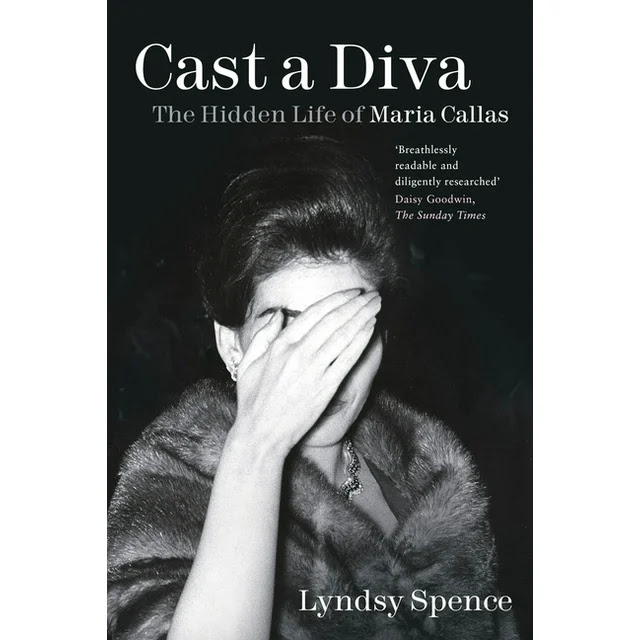
Mistress Manifesto, as a Google Blog, began in 2009 and, before I got up to speed, I chose Maria Callas as my Mistress of the Month. These days I feel that this dynamic woman deserves more and better coverage, especially as actress Angelina Jolie chose to portray her in film. So I will repost a couple items from the past and continue on with the book Cast a Diva by Lyndsy Spence, which will be the primary references for this month's posts.

Maria Callas was a famous and esteemed opera singer, some say the greatest, called The Queen of the Opera during her career, who had a soprano voice and three octave range; She is also known for her dramatic vocal interpretations. She was  born in the United States as an American to Greek immigrant parents but thought of as Greek because of her heritage and because the she went back to Greece with her mother and sister as a pubescent teen and there began her voice training. (Eventually she would give up her American citizenship and become a Greek citizen again while desperate for a divorce.) As a teen, she had entered talent contests and appeared on amateur hours, was made to lie about her age, and borrowed records from the library to imitate other opera singers.

Beyond a stellar career, Maria Callas is known as the Mistress of the Greek shipping magnate Aristotle Onassis, a reportedly fiery relationship. Did she want to marry Ari? I've always heard that to be true and it's something we will certainly explore. Onassis was married, divorced, and went on to marry the ultimate prize perhaps, the widow Jacqueline Bouvier Kennedy, wife of the assassinated United States President, John Fitzgerald Kennedy, though they divorced famously as well. Maria had also been married, to an older man who took advantage of her and had been divorced. Maria was Onassis' mistress before and, other books have stated, during his marriage with Jackie. 

Cast a Diva - The Hidden Life of Maria Callas by Lyndsy Spence, is not the first book I found interesting by author Spence. She also wrote a book about Doris Delevingne called The Mistress of Mayfair, which I reference here when I elected Doris to be Mistress of the Month in August of 2018. This month however, I will be posting based on chapters as I'm listening to the audiobook while also taking notes. Cast a Diva is reviewed on various book sites on the Internet as presenting Callas as a feminist icon; wonder if I will agree with that notion? That said, Maria Callas has also been associated with tragedy - personally and publicly.

Image from Wikimedia
I think Maria Callas was distinctively beautiful.

MARIA CALLAS

Maria Cecelia Sophia Anna Kalogeropoulos

1923 (New York) - 1977 (Paris)

The early years of the life of Maria Callas were not easy or simple and had a profound effect on her psychology. Her parents were Greek immigrants to New York City in 1923. Maria's pharmacist father had career difficulties as an immigrant and her parents did not get along. It's suggested that her father was a womanizer or that her mother, "Litsa" thought herself and her family to be above his in status. Maria's mother decided that her two daughters were essential to her survival and the three of them went back to Greece in 1937, basically ditching her husband and their father. So Maria had little to no parenting by her father from that point. Her husband, Giovanni Battista Memeghini was an older man, and so was Aristotle Onassis. I can't help but wonder if she was vulnerable to older men because her father was so distant.

Maria's mother was emotionally abusive to her and there were serious questions about her mental health with suggestions that she was unstable, a narcissist, had borderline personality disorder or even schizophrenia. A brother had died and her mother wanted another son so Maria was an unwanted daughter. Maria had an older sister, Yakinthi, and their mother forced the girl into a relationship with a man, to become a Mistress to someone who would not only Keep her but financially help the whole family. This man supported all three of them for some time. This sacrifice on her sister's part also lead to a tangled and difficult relationship between Maria and her sister. With career success, Maria Callas found herself supporting her mother, and contributing to the support of her father and sister as well. They cared little for her personal happiness.

It could be said also that Maria's mother believed in her and promoted her as a child and had the ambition that Maria would someday support them all and free her sister from a dutiful pairing. Mother recognized that her daughter, Maria, had exceptional singing talent. Her mother begged for singing lessons for Maria, demanded she give her all to practice, and she allowed Maria to go without any education past about the eighth grade. No doubt in my mind is that this lack of education and constant focus on vocal training instead of academics was part of the deep insecurity Maria felt. In 1939 Maria Callas began to study at the Athens Conservatory and the perfectionist Maria had a fabulous career for some time.

Perhaps though, it was Maria's weight, along with the fraught relationships she had with her mother and sister, that caused the Opera Diva even more emotional issues as a young woman. The Diva was self-conscious of her myopia and acne, and it's said that she only felt loved while singing. Yet, Maria tapped into her wild range of emotions and feelings as an opera singer, and was unafraid of having an "ugly" voice if it was appropriate for the mood of a song. It was her ability to interpret the drama of a scene that, along with her exceptional voice, brought the audiences to tears and ovations. She said she wanted her voice to reflect "the atmosphere and thousands of colors."

Maria Callas married a rich industrialist, Giovanni Battista Meneghini, and was married for a decade from 1949-1959 to this husband who acted as her agent and manager. The Italian divorce laws at the time would make it near impossible for her to escape this marriage and this man's machinations. Like her family, in particular her mother, he proved to be only interested in her career and the fame and money that could buy them a good life.

There was Maria and then there was Callas, a private woman and a celebrity. She disagreed with feminism and the end of gender roles. "I failed to fulfill myself as a woman" she said, referring to her desire to have a child never fulfilled. 

During this month, I will not focus on the details of Maria Callas' opera career, though I realize that many a opera fan or Maria Callas fan is interested in those details. I assure you that the book does follow her career closely. For our purposes here, we want to focus on her relationships with men, and how it is that she chose to remain faithful to the unfaithful Aristotle Onassis. How is it that she was considered his mistress?  Was it simply because he would not marry her?  Because she clearly could support herself well but he was richer? Was it his attitudes towards women in general, which most modern women would find to be revolting? Her relationship with Aristotle Onassis, whom she called "Aristo" was an extreme example of emotional and psychological abuse and domestic violence. Years went on in which an Italian divorce was not granted. Both Aristo and Maria at times lied to the press that they would marry and then claimed they were joking.

Maria Callas died at the age of fifty-three after a life typified by the highest highs and lowest lows. It's quite possible that using a certain drug illegally - though is some parts of the world it was legal - meant a slow suicide. She had withdrawn into her apartment, was estranged from her family and husband, and after her death her mother, sister, and husband would split her clothing and furniture among themselves.

Stick with me as we learn together about the life of this stellar personality and talent, through the vision of author Lyndsy Spence!

C 2024 Mistress Manifesto BlogSpot   All Rights Reserved including Internet and International Rights.

You may find other posts by searching for Onassis in the Google Blogger search feature!