Showing posts with label acting. Show all posts

Sunday, November 2, 2025

SARAH BERNHARDT : DAUGHTER OF COURTESAN YOULE VAN HARD : TRANSFORMED HERSELF INTO A WORLD FAMOUS ACTRESS AND A NATIONAL ICON OF FRANCE KNOWN FOR HER OWN "SCANDALOUS" LIFE

SARAH BERNHARDT  

(1844-1923) 

Baptized Sarah Marie Henriette Bernard but born Jewish

Eventually Called The Girl With The Golden Voice

I've had Sarah Bernhardt, who was considered the best actress of her generation, on my list of future subjects for some time. My search for books in English that are well regarded lead me to this one by author Robert Gottlieb, which is primary reference for this month's posts, along with some interesting web sites and YouTube videos. Gottlieb states that Sarah herself spun stories and that some of the people who wrote about her had agendas and so, perhaps, it's not possible to know the true or whole story. But he does try.

I think Sarah Berhardt had a hard life but like many of the people profiled here, she made the best of what she had to deal with.

What surprised me was learning that Sarah's mother, Youle Van Hard, was a courtesan in Paris and that she was born illegitimate and unloved. I was also surprised to learn that after Youle took Sarah out of school, she encouraged her to become a teenage courtesan. Youle had three illegitimate daughters over the years. You could say she set her daughters up to be courtesans, and, though youthful Sarah did have patrons for at least some of the time in her youth, her younger sister reportedly became a prostitute and had an even harder life. 

Sarah's eventual successes may have begun because it seems that her mother, a patron, or most likely her birth father, were willing to provide an education for the girl. This was a time when women often went without an education. She took an early interest in acting and the theater and was educated at a good convent school and then a school for acting, but she was also born into a world where her gender - her family's situation - her class at birth - and her Jewishness came with limits. If you've been reading Mistress Manifesto, then you know that many a courtesan in previous centuries was also an entertainer. It was beauty, talent, and fame that attracted patrons and who knows what came first. Acting has become a respectable profession but it wasn't always. It was long assumed that any actor, any theater person, was living a scandalous life.

Sarah Bernhardt eventually became world famous - a celebrity - while also known for her 'love life.' I think that Sarah was expert at marketing and promoting herself, kind of like the way the singer-dancer Madonna, an expert at reinvention, has been. As an example, in her youthful days, Sarah posed with a hat that had a bat on top rather than a bird and took a coffin with her on her travels, and may have slept in it, which is sort of "ghoul school." Or was that just for a photo? I suspect that, if she took her coffin seriously, it was to remind herself to live life to the fullest rather than any darker reason such as thinking of herself as a Parisian vampire.

Sarah Bernhardt may have been known to love her independence. Was she a feminist? We can't say that just becoming an unmarried mother who has to support a child makes a woman a feminist. What went on in Paris, where courtesans had their place in society was one thing. Her behavior and attitudes were even thought to be part of an exaggerated or unstable personality. And maybe she did have some sort of breakdown at one point or another. 

Sarah Bernhardt was Jewish by birth but her father was Catholic. She, and her sisters, were baptized eventually. She was placed in a Catholic orphanage. But who really was her father? 

It wasn't common for a discarded orphan to leave a convent at thirteen years old and begin school at the Conservatoire de Musique et Declamation in Paris. Someone was interested in her education and her religion and wanted to give her a chance at success. Was that person her mother, who she believed - with good reason - didn't love her but who might have set aside some money? A father?

Excerpts from EBSCO.com: "Although she won second prize for tragedy in 1861 and second prize for comedy in 1862, she regarded the conservatory’s methods as antiquated. She left the conservatory in 1862 and accepted a contract with the national theater of France, the famed Comedie Francaise....In 1867, when Bernhardt was twenty-two years old, she became a member of the company at the Odeon, where she found definite successes in roles such as Cordelia in a French translation of William Shakespeaer's play King Lear (pr. c. 1605-1606), as Zanetto in François Coppée’s verse play, La Passant (1869), and as the queen in Victor Hugo's Ruy Blas (1838). Indeed, it was Hugo himself who called Bernhardt the girl with the Golden Voice (vox d’or)—a name that stayed with her throughout her life. Meanwhile, Bernhardt’s success was so immediate that she even gave a command performance for France’s Emperor Napoleon III. However, the Franco-Prussian War interrupted her rising career with the closing of the Paris theaters in 1870."

Like several of the women I've featured here, Sarah was a woman who inspired artists to portray her. Alphonse Mucha, whose posters are rather well known to this day, was a collaborator with Sarah. She posed for him and he also designed costumes, sets and jewelry for her. He even enjoyed a seven year contract with Sarah. Their professional relationship began when Mucha designed this poster for her, as she starred in the play 'Gismonda.'

These posters were all over Paris the first of January, 1895.

Also, like several of the women I've featured here, a flower was created and named for Sarah, which is a peony.

In Robert Gottlieb's book we learn early that Sarah was not exactly the most truthful person, though her lies, as I see it, were out of concern for her reputation, her career, and ultimately her ability to support herself and her son. He says on page one that she was "a complete realist when dealing with her life but a relentless fabulist when recounting it." One of the questions was what year she was born and where. The 1844 above is the earliest year. One page 2 he says, "There are three basic components to her experience of childhood, two of them enough to derail an ordinary mortal: Her mother didn't love her and she had no father. What she did have was her extraordinary will: to survive, to achieve, -and - most of all - to have her way."

Sarah Bernhardt's son, Maurice Bernhardt was well loved. Never loved by her own mother, Sarah was determined to love him. She had been sent away to be raised by others and then introduced to the world in which men gave money to women for sexual favors, although that's not to say that there was always the possibility that the relationships her mother had - or she had - entailed far more. For at least a couple years after the birth of her son, someone supported her. And she took lovers, even when someone might be considered to be far too old for her.

She was bisexual, had romantic affairs with both men and women and played both male and female parts on stage. She was creative. Besides her talent for acting and singing, she became an accomplished painter and sculptor. She was also a woman of business.

Sarah married one time, to a Greek military officer and actor ,Aristides, also called Jacques, Damala. They married in 1882 when she was in her late 30's He was a decade or so younger than her, they separated, but stayed married until his death in 1889. Damala was an opium and morphine addict and a womanizer who died of an overdose.

Perhaps she proved her strength of spirit and courage most during World War I. In 1915 she had a leg amputated but soon after she volunteered to perform for the troops, to improve moral, and insisted on being carried to the front lines. She appeared in propaganda films and patriotic plays
.

Gottlieb's book is short but sweet. I'm challenged to post what would be most interesting to my readers about this fascinating woman! Read on!

Missy

C 2025 Mistress Manifesto BlogSpot All Rights Reserved including Internet and International Rights

*** She was photographed sleeping in a coffin.

The following web sites and articles are reference or this post

MUCHA FOUNDATION ORG See other posters that featured Sarah Bernhardt and read about the artist.

EBSCO RESEARCH : SARAH BERNHARDT


Wednesday, February 26, 2025

LILLIE LANGTRY "THE JERSEY LILY" SINGS ON THE MARGATE BOAT 1903

I searched for the silent film that Lillie Langtry made - just one - and apparently a copy does not exist.  However, the model -actress-singer did record some songs and this YouTube video was a find. It also has many a photograph.  She was a Pear's Soap model and is credited as the first celebrity to endorse a product during her early days.

The Margate Boat was recorded in 1903. (She was in midlife.)

The one film she appeared in, in 1913, was titled "His Neighbor's Wife." (She was nearing her senior years.)

Born in 1853, the woman born Emilie Charlotte de Bathe, known to the world as an model, actress, singer - and Royal Mistress, died in 1929 in Monaco, age 75.

C 2025 Mistress Manifesto - BlogSpot All Rights Reserved including Internet and International Rights.

Wednesday, February 19, 2025

LILLIE LANGTRY BECOMES INDEPENDENT OF HER HUSBAND, FOUNDS A THEATRE AND BECOMES A BUSINESS WOMAN.

Excerpt pages 246-247: in 1882, after success in Britain, Lillie founded her own theatre company and took it on a tour of the United States. She found that her reputation had preceded her, so she played to full houses wherever she went.  She made repeated tours of the States that were Equally successful. And she collected male admirers along the way.  One of them, wealthy horse breeder Freddie Gebhard, spent a fortune on her.  Her earnings from the theatre and Freddie's expensive fits enabled her to start a winery and, like Freddie, breed horses. She became an American citizen in 1887m which enabled her finally to have her marriage to her first husband, Edward, dissolved.  The marriage was ended by a California court, but legal opinion at the time suggested that the divorce was invalid in Britain and indeed anywhere outside California...


Lillie Langtry had another relationship, a violent one, with a man who also had a passion for horses.  In 1893 he died and left her more horses and she had a business named Mr. Jersey.  I note that she did not use Miss or Mrs. Jersey.  This put it into perspective for me that this Victorian Era woman had to deal with the extremely limited options women had at that time.  Queen Victoria might have ruled, but most women could only achieve power and status through their husbands or associations with men. And it's often still the same way.

Do you have a mentor, patron, benefactor? Is there anyone you can count on for a personal loan, gift, scholarship or internship?

Please leave me a comment!
Missy
 

Monday, July 22, 2024

SOPHIA BADDELEY : DESERTED BY A ROGUE SHE FELL FOR, SHE BECAME THE SOLE SUPPORT OF THREE CHILDREN.


Stephen Sayer was one of the Sheriffs of the City of London, a politician who was not an aristocrat or a noble.  Mrs. Steele, Sophia's friend-companion-chaperone-servant did not like the man, perhaps thinking him not good enough for Sophia. Sophia continued to spend more money than she had and Sayer lived off Sophia and treated her as a servant.  Mrs. Steele quit! 

Sayer humiliated Sophia by leaving her while she was pregnant to marry another, richer woman. He was an opportunist and user.

Though Elizabeth Steele did continue to look in on her friend, she no longer worked on the Memoirs and so we have only glimpses of Sophia's life after so many rich details were accounted.

Sophia did return to the stage after the birth of her son and what is called "a long illness.'  I wonder to myself if she had post partum depression. Her salary as an actress was increased to 8 pounds plus a clothing allowance.  She was still popular with the audiences even if she was excluded from society.  In 1778 she earned a huge sum.   And she found love again with a fellow actor with whom she had two more children - three total.  

When Mr. Webster, the father of her two children, died, she'd become nervous and unstable.  Perhaps she had long suffered from a psychological condition. 

Sophia left London with yet another man, John, and moved to Dublin, where she appeared onstage, and then on to Edinburgh and York.  Her heath was poor, she was chased by debt, and she had a new addiction, laudanum, a tincture of opium.  Her addiction intensified. She appeared on stage when possible, until the end of the 1785; for ten years she supported her family as an actress.  What happened to John who had moved her north from London is not known.  

Sophia was reported to have 'consumption.' This usually means tuberculosis, and if so, then Sophia likely had been infected years earlier.  She was also reportedly "lame' a more generic term, not to mean that she limped but that she was weak. Sophia was only 41 years old when she died.  

She was loved enough by her fellow players in Edinburgh that they contributed to pay for someone to tend to her on her deathbed. 

I feel grateful to author Katie Hickman for this well researched and interesting book. the primary reference for this month's post. 

Thursday, July 11, 2024

SOPHIA BADDELEY'S REPUTATION REMAINED AN ADVANTAGE THAT DREW COMPETITIVE OFFERS FROM OTHER MEN

Born into a good family associated with the Royal Family, married, earning her own fortune through acting and singing:  all these things helped Sophia Baddeley maintain a high profile at a time when most Courtesans where understood to be Courtesans and not acceptable to the same society in which the men who gifted them and their wives belonged.

Page 48:
"Sophia's wealth enabled her to make 'an appearance equal to a woman of the first rank' - a suspiciously ostentatious display for a mere actress.  Nonetheless, as the celebrity of the moment she continued to enjoy the kind of public approbation that was wholly denied to ordinary courtesans. however successful."

Page 33:

 "Sophia Baddeley's short by meteoric life was nothing if not full of drama.  An actress who could not act - who, in fact, avoided the fatigue of the acting life whenever she could - she nevertheless became one of the most famous players of her day, achieving the kind of overwhelming celebrity which is rare even in our own celebrity-obsessed age.  hers was an erotic beauty which had the power to bewitch both men and women, and which exerted that kind of charisma which, unless tempered with unusual reserved of moral strength and level headedness, can hopelessly distort lives, and even unhinge the rational mind. "

***
Page 49:  ... "It was now widely known in the world of gallantry - as the English demi-monde was then called - that Sophia was the kept mistress of Lord Melbourne, but this fact, instead of keeping other admirers at bay, only served to increase their attentions.  Mrs. Baddely had nos so much lost her reputation, as gained one.

***
Missy here:  It was as if dozens of admirers had fallen in love with Sophia at the same time and could not help themselves but to call upon her and that it gave them pleasure to please her and buy gifts for her.  Some of the offers she got were doused with romantic notions, such as that she be divorced and remarried, though divorce was expensive and uncommon.  When the man or the offer were not to her liking, she suggested she wanted to stay true to Lord Melbourne. 

C 2024 Mistress Manifesto BlogSpot
All Rights Reserved including Internet and International Rights.


Saturday, July 6, 2024

ACTRESS SOPHIA BADDELEY WAS SLOW TO ACCEPT FINANCIAL OFFERS CONSIDERING HER OWN IMPRESSIVE INCOME FROM ACTING AND SINGING

We continue with our book review-report...

The first man to take on Sophia Baddeley was married, Lord Molyneux. Still edging into the courtesan mentality, it bothered the actress that he was married.  Lord Molyneux persisted, suggesting she should accept him by offering to pay off all her debts and settling 400 English pounds on her per year. Her friends encouraged her towards him but, though the debts were significant, and she could spend, she considered that her singing and dancing brought her income to about 90,000 pounds a year in modern money. This was an amount beyond the possibilities for most of her peers in acting. She could afford her own private carriage, servants, expensive clothing, so why would she need him? 

She and her husband appeared on the same stages as actors though formally separated and that helped preserve her reputation some. When King George III was so taken with her beauty that he commissioned her portrait to be painted by an esteemed artist, society opened to her. The painting was called The Clandestine Marriage, though. She was invited to charity events and teas and was given more respectability. Noblemen began to pursue her, wanting the prestige of their association with her.

But, that was not all they wanted.

A hundred years earlier or so, in 1660, women had just been allowed on stage. Until then male actors played female roles.  An actress was thought to be a prostitute. Theaters, called playhouses, were in the hub of the prostitute's trade. Actresses experienced being kidnapped, raped, or entrapped in illicit "marriages." Actresses left the stage to become Kept women.  King Charles II was the person who had reestablished theaters in the mid to late 17th century and he himself had taken two mistresses who had been actresses, Mary "Moll" Davis, and Eleanor "Nell" Gwyn.  So there was a precedent set. 

However, by Sophia's time the roles actresses played had also changed; less foul mouthed, not so sexual.  There were basically better roles, roles women in the audience could relate to so that they too became fans. As the roles got better, the reputations of actresses improved as well.

Soon enough a new pursuer, Lord Melbourne, twenty-one, recently married, and very rich, came into Sophia's life. Once again, because he was married, Sophia refused him.  First he sent her a 'present' of about 18,000 modern pounds, then came to call upon her himself, leaving thousands more, and then again, till he had given about 50,000 pounds.  He said he would spend his whole fortune on her if that was what it took to possess her.

Though she was rich in her own right, Lord Melbourne prevailed and Sophia took to spending his money on fine things - silks - diamond earrings - which added to her costumes.  She had a habit of giving things away to anyone who complimented her.  Before she wore her garments three or four times, she handed them off to servants who appreciated them.  Sharing her wealth made her popular with the people who worked around her.  However, she grew bored of Lord Melbourne, his presumptions that he could show up at any time and that she would have sex with him that was not satisfying.  She preferred him away.

Page 45: "As Sophia surrendered herself to this life of extravagance and luxury, the toils of her theatre career began to seem increasingly irksome."

C 2024 Mistress Manifesto BlogSpot
All Rights Reserved including Internet and International Rights.

Tuesday, July 2, 2024

SOPHIA BADDELEY : HIGHLY PAID GEORGIAN COMEDIC ACTRESS : BECAME A COURTESAN AFTER MARRIAGE and A HEARTBREAK BUT BEING ON STAGE SAVED HER


Katie Hickman's book includes two of the women I featured here at Mistress Manifesto in the past: Harriet Wilson and Cora Pearl.  However this summer we'll be focusing on two other women, historical Courtesans, who lived in England.


SOPHIA BADDELEY

Sophia Snow

1745-1786

Sophia Baddeley, according to author Katie Hickman, was an actress who could not act.  Rather it seems that this gorgeous English woman made it onto the stage due to her beauty and became famous for being famous, though she did have some talent.  Her personality counted too.  She was adored by her fans and her fellow actors and the servants for she practiced a kind of trickle-down economics.  Whatever clothing and jewelry she acquired, she was sure to give it away.  In 1771, at the opening event of the Panthenon, a concert hall that did not wish to admit "undesirables" as the upper classes of society attended there, over fifty men, including nobles holding swords, threatened an uprising if she was not admitted to attend the performance.  She had only become a courtesan as well as an actress a year or so before.

"Hers was an erotic beauty which had the power to bewitch both men and women, and which exerted that kind of charisma which, unless tempered with unusual reserves of moral strength and level-headedness, can hopelessly distort lives, and even unhinge the rational mind. ....Sophia Baddeley had neither the moral strength nor level-headedness.  She was vain, spoilt, impetuous, lazy, spendthrift, only moderately intelligent, and possessed a great deal of sexual energy.  She was also warm-hearted, affectionate, funny, mercurial, and generous to a fault.... it was impossible not to love Sophia.  It is also clear that she was much beloved by many others, not just by her aristocratic admirers --- the majority of whom hunted her quite ruthlessly both for sex and for her fashionable cachet --- but by the ordinary people who came across her: her servants, her fellow actors, the everyday public who came to hear her act and sing, and who so relished the stories of her scandalous life and loves." (page 33)

Unlike some of the other courtesan's I've included here at Mistress Manifesto, who were born in poverty or who renamed themselves aristocratic names to suggest they had been born into a higher class, Sophia was born into a 'respectable' family.  Her father, Valentine Snow, once worked as a musician for King George II and one of her grandfathers had been a Royal Musician. She and her brother were also trained in music, with the idea that she might play the harpsichord - clearly a genteel instrument.  She could have married well enough and not lived through the life she did but her divergent path began with her marriage.

At eighteen, in 1864, she eloped with Robert Baddeley, an actor almost twice her age, but in 1770 they agreed to legal separation and then never filed for divorce. Robert was promiscuous and it would seem he never did have any expectation that the beautiful Sophia would be faithful to him. It was Robert who insisted that Sophia be given an acting part for a production at the Drury theater where he was well known. She went on as a stand in and then continued to appear in the theater's productions, including taking leading lady roles in Shakespeare's plays As You Like It and Twelfth Night. Five years into their marriage, Sophia was best known for 'genteel comedy.' Management hated to admit it, but she had draw and attracted audiences, never mind her acting. She could sing. She was hired to sing at other venues and paid the highest wage of any actress at the time!  

While they apparently did not maintain attraction for each other, both Sophia and Robert had a variety of dalliances. When one, a Mr. Mendez, began to woo her, Robert pimped his wife out to the man and encouraged her towards him. Very slowly Sophia got what is thought of as a courtesan's attitude; she decided that she would accept the patronage or a rich man who would provide for her a lavish lifestyle while being sexual with him and it would be she who chose among the men who wanted her. She finally lost her heart though - perhaps for the first time - to a man who was a member of the Irish peerage - but poor - and then switched to his brother.  This brother spent money on her.  When he ran out of money, she took over paying their shared expenses. Then it was all too much and the debtors were after them. He said he had to leave her.  She tried suicide by overdose and lived for the rest of her life with stomach ailments. She was not a person with strong health.

Sophia Baddeley, when first pursued as a Courtesan, was both protected in a sense by her marriage, her status, her career as an actress, and her ability to make her own good money, which was rare for any woman in Georgian England. However, when the main man who made all things possible, Lord Melbourne, lost interest, she quickly lost her status.  A shopaholic, she had spent the fortune she was given rather than invest, was deeply in debt, and risked sinking into common prostitution.  Unwisely, perhaps because the married Melbourne had been exceedingly generous, she had never had a legal contract with him for support that would last past his interest in her.

Sophia was a shopaholic, a person who dealt with the psychological and emotional stresses in her life though compulsive acquisition of things she really did not need.

Though she lived through falling in love with men who were opportunists and users, being betrayed and deserted by them, Sophia was able to survive without becoming a prostitute. She was able to support herself and her family which included three extramarital children she had with two other men, as an actress, far from London, in northern England, and especially Edinburgh, Scotland. In the end it was her fans who did not desert her and the career her husband had instigated for her was allowed her to persevere.  Her health declined steadily and she died in 1786 at forty-one with consumption - TB - which she no doubt had for some time.

This month we will follow the courtesan career of Sophia Baddeley, and learn more about what life of a Courtesan was in the late 18th century, Georgian period England.  Author Katie Hickman's book is the primary reference for these posts.

See you next post!

Missy

C 2024 Mistress Manifesto BlogSpot

Check my archives!   You can also bring up posts by using the search feature embedded on the sidebar of the Google Blogger.

April 2013             
HARRIETTE WILSON : One of Four Mistress Sisters of Regency England 

July 2012       
CORA PEARL
Brought Out Naked on a Silver Dish, Lined With Violets

P.S.  The Image on the book cover is not Sophia!  I'll be posting a lithograph of her and you'll probably not think of her as beautiful by today's standards.  Which, I think, proves that personality counts!

Wednesday, July 14, 2021

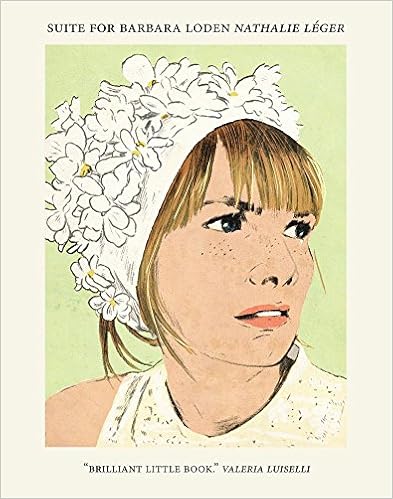
SUITE FOR BARBARA LODEN by NATHALIE LEGER is a MULTI GENRE MASTERPEICE

Image result for suite for barbara loden The book was authored by French writer Nathalie Leger.


This is an excellent review of the book, which was an accomplishment of Nathalie Leger.  The author had difficulty in researching Barbara Loden.  Sadly the Elia Kazan archives do not contain anything about his second wife.

EXCERPT :  Here, now, is a remarkable new book that does everything - biography, criticism, film history, memoir, and e3ven fiction, all at once, all out in front.  The book is "Suite for Barbara Loden," by French author Nathalie Leger, which was originally publishe4d in 2012 and is recently out in English translation from the small press Dorothy.  It's all the more remarkable for doing so much in a mere hundred and twenty-three pages (in translation by Natasha Lehrer and Cecile Menon). Barbara Loden direct3ed one feature film, "Wanda" from 1970, in which she also starred.  She was already an actress, including  in "Wild River" and "Splendor in the Grass," both directed by Elia Kazan, whom she married in 1968.  She won a Tony Award for her stage role in Arthur Miller's "After the Fall," from 1964.  But Loden's place in artistic history is assured y "Wanda," one of the best American independent films ever made.  She had other projects in minds (including an adaptation of Kate Chopin's novel "The Awakening" but was unable to find financing for them.  She died of cancer in 1980, at the age of forty-eight.

Monday, July 12, 2021

THE ARRANGEMENT : A NOVEL BY ELIA KAZAN THAT MAY BE AUTOBIOGRAPHICAL


The script by Arthur Miller for the film After The Fall was thought to have been based on his personal experience in a marriage with actor Marilyn Monroe, an ex wife, and she was said to have been the female character. Elia Kazan's 1967 novel that was turned into a film in 1969, The Arrangement, was thought to be based in his relationship with Barbara Loden, also using her as a character. The film started Kirk Douglas as a successful man having a midlife crisis. Faye Dunaway acts as a girl named Gwen - the character possibly based on Barbara.

If interested in when Marilyn Monroe was a Mistress, you can find her in the archive of May 2016:

MARILYN MONROE - ACTRESS - "SEX GODDESS" - and MISTRESS OF TALENT AGENT JOHNNY HYDE


Tuesday, June 2, 2020

LIDA BAAROVA - MISTRESS OF NAZI JOSEPH GOEBBELS WHO PAID THE PRICE FOR ASSOCIATING WITH NAZIS

LUDMILLA BABKOVA / LIDA BAAROVA 
(1914- 2000)

Image result for the devils mistress lida
Image from World War II Gravestones

MISTRESS OF THE MONTH

When it comes to the Nazi's and the Holocaust it's easy with hindsight to condemn the women who became Mistresses to men who were Nazi's and to imagine they were (also) evil incarnate and deserving of horrible punishing fates.  It's easy to think that they were ruined since they were on the loosing side of World War II.

Lida Baarova, as Ludmilla Babkova was known as an actress, was Czech - Slavic. Lida had a difficult life overall especially because her career was harmed by her involvement with one of the Nazi's finest, but she was a successful actress - her talent and beauty were never doubted but her politics was - and she lived a very long time into the year 2000.  Her amazing filmography of over 60 films from 1931-1970 proves that she survived past her disastrous personal affairs and a honorable or dishonorable  (depending on whose side you were on back in the day) experience of being Nazi Joseph Goebbels's mistress.  In her later years she denied they had ever had sex but the affair was one to remember for many others.

You've heard of Joseph Goebbels and his wife Magda and their many children; he and his wife poisoned their children and then themselves in the very same bunker where Adolf Hitler and Eva Braun, his Mistress and last minute wife, would also kill themselves.

Joseph Goebbels' life certainly went into a surprising direction. Born into a Catholic family, he considered being a priest at one time but backed away from the church as his Naziism prevailed. He was a very intelligent man and earned a Masters degree and then a Ph.D.  Physically he wasn't much. He was also known for the deformity of a right foot that turned in and made him walk with a limp.  This was the kind of physical deformity that made so many others undesirable for the idealized perfection of the Nazi's who were excessively interested in genetics. He was a Reich Minister of Propaganda of Nazi Germany from 1933 to 1945 and held other positions in Germany working for the Nazi party and Adolf Hitler, considered by some to be his right hand man. He was a public speaker. He was a womanizer. He became anti-semitism personified.

What could he have been thinking when he invited a famous Czech actress to move to Germany and make films with a neo-German sensibility?

Image result for the devils mistress lida
Actress  Tatiana Pahofova, a Slovak, acted as Lida in the fictive film.

I first heard about Lida over the New Year holiday.  I reveled in being entirely alone for a few days and I binged on Netflix.  I came across a film called The Devil's Mistress - Lida Baarova - which was quite dramatic and interesting but also condemning.  I wish the film had a different title ; it sounded to be a horror flick, a genre I don't watch. The film came out in 2016 and the set up is as as a interview or confession.  It became the prime reference point for this month's posts.  Then I started reading around the Internet and watching YouTube videos about Lida, who is portrayed in the film as without apology.  This month's posts will link to a number of articles and videos.

FIrst of all, as I watched this film, which is not a biography,  I felt an inner tension. The question I had was left unanswered by the film was "Did Lida make films in Germany to survive?" She was a Slavic person  - as Czech's are - and at the time lived in a country that was part of the Austrian empire.  As any Holocaust historian will tell you, the Jews were just the first ethnic group the Nazi's wanted to destroy. They hated Slavic people too.  Many Slavs were killed during the occupation of their countries. The Nazi's hated Catholics ; priests and nuns were rounded up. A Nazi had to prove there was no Jewish blood in him, though these days some genealogists say Hitler himself was probably part Jewish. Eva Braun, Hitler's mistress  (Mistress of the Month June 2010) had been mocked as "Ewa" - the Polish way of spelling and pronouncing Eva, when there were suspicions that she was a bit Slavic. The film doesn't suggest that Lida might have decided to do as Hitler wanted or Goebbels wanted so she herself could survive. In this film Lida Baarova is portrayed as having no guilt.

Born in 1914, Lida was only 20 and not aware of what was happening in Germany when she had her first emotional love affair with a man.  She had a serious relationship with a German, and fellow actor Gustav Frohlich, her costar in the Film Barcole in 1935. They lived a couple doors down from Goebbels according to one account. Astonishing for the time and place, they were not legally married.  As he was married, she was first a mistress to him.

In the film The Devil's Mistress she is portrayed as having a family who were supportive of her career.  She first wanted to be a ballerina.  Her mother was an opera singer.

There are very many accounts of Lida's life and it gets confusing to sort out, especially as her own memory may have been edited.  I will try to synthesize these accounts knowing that Lida was aware of how propaganda was supposed to work.

Hitler came to visit the studio in Austria and noticed her.

"Liduska" had an accent and was unable to pronounce unaccented German though she was expected to and studied the language but she was strikingly beautiful and - strangely - is supposed to have been the Nazi ideal of beauty - but in my opinion has the Slavic look of certain of my friends.  She moved to Berlin and began to make films for that audience - propaganda films.  It was considered a career move. Hollywood would have been a better move but it's said that she refused offers and lived to regret not becoming as big as Marlene Dietrich.  So though she was established as an actress her German film making made her unpopular in her own country as she was seen as working for the enemy.

Goebbels was at the time of their relationship the Nazi Party's Reich Minister of Public Enlightenment and Propaganda.  The relationship happened fast, from when they met in September of 1936 to August 1938.  She lived to regret it and her own country never forgave her.  Was she simply nieve?  Propelled by lust?

Magda Goebbels, the wife of Joseph, was considered a role model for German women as a wife and mother and she had a reputation to uphold. Knowing of the affair with Lida, she went to Hitler and told him she wanted the affair to end.  Since Goebbels was a womanizer, Lida was not the first or last threat to Magda's marriage. Perhaps the relationship between Lida and Joseph was the most intense and serious, the biggest threat to Magda's marriage to that point. Magda reportedly also had affairs.  As evidence for the seriousness of their relationship, Goebbels attempted to have Lida move in with him at his villa.

Hitler, who Lida says never liked the involvement she had with Goebbels, insisted that Goebbels break with Lida rather than leave his wife for her. He did and some reports suggest he considered suicide. That left Lida in a horrible place to be in; She ran home to Czechoslovakia, where she was hated, and again, maybe it's that Hitler banished her and her films, and then in 1943 went to Rome.  She worked on films with  Italian film directors Antonio de Sica and Federico Fellini.  But in 1945 American troops arrested her as a Gestapo spy.

Lida Baarova managed to marry again and again.  After the war, in 1947, she married Jan Kopecky and stayed married to him till they divorced in 1956.  In 1969 she married Kurt Lundvall, who died in 1972.  She had Parkinson's disease but lived until 2000, age 86.


Please note the following :
You may use the search feature embedded in this Google Blogger to locate other Nazi Mistresses within this blog.  June 2018 -  CO CV CHANEL - NAZI and SPY or SOCIETY WOMAN IN LOVE.  Nov 2017 the Mistresses of Shindler (of Schindler's List)

C 2020  Mistress Manifesto BlogSpot  All Rights Reserved including Internet and International Rights. 

Thursday, June 27, 2019

CAROLE MALLORY OFFICIAL WEB SITE - A CATALOGUE OF HER ACCOMPLISHMENTS

CAROLE MALLORY COM

From stewardess flying Pan Am to literary author, journalism, interviews, as well as actress.  (Hey check out past posts about Pan Am as well as Howard Hughes)

Wednesday, June 12, 2019

CAROLE MALLORY AS A MODEL AND ACTRESS and WRITER and AUTHOR

During her modeling career in the 1970's, Carole Mallory was on the covers of Newsweek, Cosmopolitan, New York, Esquire and GQ, and French Vougu.  She was in television ads for Tigress perfume as well as doing print ads for Tabu perfume   She did an English Leather men's cologne television ad that went on for a decade. It was the ad that went "All my  men wear English Leather or they wear nothing at all!"

Carole Mallory also developed a career as a magazine article writer, in particular interviews of famous people.  She made up to $20,000 for one article she wrote for Esquire.

Sunday, September 23, 2018

MIKE TODD and GYPSY ROSE LEE - BEFORE ELIZABETH TAYLOR?

Gypsy Rose Lee starred on Broadway and rumors were that she and Michael Todd, who would marry actress Elizabeth Taylor, had a thing, and that Gypsy was crazy about him.


Image replaced June 2021