Showing posts with label Coco Chanel. Show all posts

Saturday, November 18, 2023

IN PRAISE OF DIFFICULT WOMEN by KAREN KARBO : MISTRESS MANIFESTO BOOK REVIEW / HELEN GURLEY BROWN

 Subtitled Life Lessons From 29 Heroines Who Dared to Break the Rules.

 Mistress Manifesto Book Review:

The 29 Women given attention in this book are the favorites of author Karen Karbo so the list might not be what you'd come up with. What I found interesting was that a couple of the women she calls "Difficult" have been featured here at Mistress Manifesto. Personality wise I don't think all the women she lists and profiles were Difficult, for some of them surely must have been Charming, rather most of these women persevered through difficult times because perhaps in some cases they were trail blazers, doing what used to be called "man's work," or managing to make it in life despite starting out with disadvantages, or noteworthy because they stood for something. Others are simply fascinating or original or gained fame: Josephine Baker, the Black American exotic danger who became all the rage in Paris in the 1920's or Edie Sedgwick, artist Andy Warhol's muse for a year who made 18 films with him, and was an "It" girl, but also a drug addled eccentric who went through a fortune and died of an overdose. I find both Josephine and Edie interesting.

The women who were elected to both author Karne Karbo's panthenon as well as mine, are
CoCo Chanel and Helen Gurley Brown.  I'm also interested in Diana Vreeland and Martha Gellhorn but Martha is one woman I have yet to cover, though her relationship with writer Earnest Hemingway would qualify her as a Mistress of the the Month.

The profiles admit the foibles.  

I've done a lot on CoCo Channel here but not much on Helen Gurley Brown. So to retell her story :

At around forty, Helen was newly married for the first time, had just recently spent a fortune after scrimping and saving for years, on a used luxury car, and was the highest paid woman copy writer in the business.  Her husband, David Brown, who had been in the literary world and became a film producer, suggested she write Sex and the Single Girl. In 1962 it sold two million copies in three weeks and was considered controversial.  (Even if stats said otherwise, people were supposed to wait until married to have sex.)  In it, she suggested the book was supposed to be for women who, like her, did not come from having advantage. It was full of advice.

Helen Gurley Brown's book did get some bad reviews.

She was one of the first authors to go on a book tour and visited 28 cities in 13 weeks. Radio - Television - she got hate as well as fame and the movie rights were purchased by Warner Brothers.

However, besides working hard for years, it was her husband's connections that got her attention when it came to taking over the editorship of Cosmopolitan magazine.

"Helen was 43 when she took over as editor in chief. Her magazine experience was limited to reading them.  She might as well have been entering an operating theater to perform an appendectomy.  Every person on her staff had more experience than she did, including her own secretary.  She had no idea how to manage people, oversee editorial budgets, and translate her vision into magazine-ese. " (Page 145)

"To whatever degree she felt truly terrified or insecure, Helen never abandoned the central organizing principles of her life; to trust her gut and work harder than everyone else. Her gut said, If I care deeply about men, sex, love, money, and looking hot at all times, other women will too. Her premise was simple and answered the hoary old Freudian question" What do women want?" (page 145-146)

So, I do think this is a good book, and because each chapter features a mini bio of a woman, you can always skip the ones you are not drawn to read.  You might, however, discover there is someone you want to know a whole lot more about!

C 2023 Mistress Manifesto BlogSpot
Book Review  All Rights reserved including Internet and International Rights


You can bring up past posts that mention Helen Gurley Brown using the search feature embedded in this blog.  She wrote more than one book, beginning with Sex And The Single Girl, which at the time it was published in the 1960s was considered outrageous. 

Saturday, December 10, 2022

BETTINA By GUY SCHOELLER : MISTRESS MANIFESTO BOOK REVIEW

SIMONE MICHELINE BODIN -  "BETTINA" - THE FIRST SUPERMODEL and MISTRESS OF ALY KHAN - A JET SET ERA MISTRESS  was our June 2015 Mistress of the Month. You can find that month in the archives and it may be fun for you to simply search for the word 'fashion.' Recently I found this small fashion memoir by Guy Schoeller.


This short but sweet book is mostly full of black and white photos of Bettina as a model, some of her in her personal life, some from her heyday - from 1944 to 1990. Her career spanned about twelve years and she twice abandoned it for love. At a time when holding a pose stiffly and haughtily was the way one modeled, Bettina was loved for her movement and her lack of pretense. She came from an ordinary background in Normandy but came to Paris with the ambition to model at eighteen. She dropped everything at 30 to be with Prince Ali Khan but he died five years later. I'm struck by the expressiveness of her hands, the way she used her arms, her bearing.

What I did not know: That in 1952 she helped Hubert de Givenchy launch his couture house.
That she created a first knitwear collection for Jacques Heim in 1954. That in 1969 CoCo Chanel created a collection inspired by her. That in 1972 she became Couture Director for Emanuel Ungaro. In 1974 she was in charge of public relations for Valentino in Paris.

C 2022 Mistress Manifesto BlogSpot


Friday, October 28, 2022

THE COURTESAN PRINCESS ENDS HER YEARS A DEVOUT CATHOLIC

This is about  Liane de Pougy, married name Princess Anne-Marie Ghika of Roumania, and her later-in-life involvement in Catholicism. 

Born Anne-Marie Chassaigne in 1869, Liane had been born into a Catholic family. After her retirement as a courtesan, due to her marriage to the Prince, she again became acquainted with her faith. She was not especially happy in her marriage as the years went on. She sought some advice on marriage, and she was told that it would be most honorable and spiritual if she stuck with it, though her husband and her were not compatible in important ways. He was younger than she, he was apparently desperately alcoholic and in ill health, and he may also have sought sex with prostitutes. At one point she wanted to leave him and live separate lives.

The Dominican Sisters at Saint Agnes cared for children who were fundamentally disabled.  From her Blue Notebooks, here is an excerpt of how she became familiar with their work. She would chose to fund raise for them and the fashion designer and once-upon-a-time Mistress, CoCo Chanel was a generous donor to the same !

Here is an excerpt:

"We were punctual.  She took us to the playground... and there I saw sixty-seven unhappy creatures between eight and sixteen years old, ... the most inexorable suffering.  I nearly fainted. ... Oh! Those cries!  Those contortions, those grimaces, that smell...  Once you have seen that, never never again can you complain of anything.  I was ashamed of having talked so much about myself to Sister Marie Xavier. I pressed the poor tremulous, rather dirty hands which reached out towards me.  I searched those wandering, fixed or mad eyes for some glimmer of light.  I laid my hand on those foreheads, tumultuous or stunned. feverish, so pale... I gave five hundred francs.  George Ghika (her husband) gave a hundred, and I knew that he was more disturbed than he liked to admit.   (page 219 of The Blue Notebooks)

C 2022 Mistress Manifesto BlogSpot

Tuesday, July 30, 2019

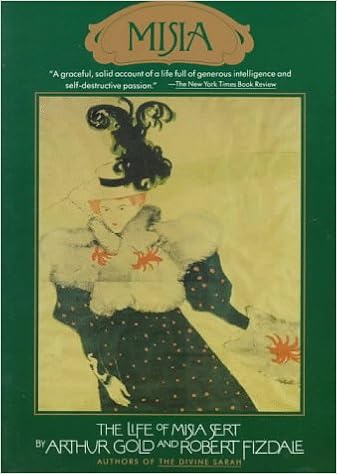
FOCUS ON MISIA SERT - BY BARBARA WELLS SARUDY


BLOGSPOT: IT'S ABOUT TIME by BARBARA WELLS SARUDY


Ms. Sarudy has done a wonderful job of collecting art and photos of MISA SERT, a good friend of COCO CHANEL. For past coverage of CoCo Chanel, Mistress of the Month twice here at MISTRESS MANIFESTO BLOGSPOT, please use the search feature embedded in this Google Blogger! 

 This well known Toulouse-Lactrec poster has Misia Sert as model.

Saturday, July 27, 2019

MISA PERFUME by CHANEL

CHANEL - MISIA PERFUME
From the site:
Named for the art patron Misia Sert, Gabrielle (CoCo Chanel) Chanel's confidante. Evoking the air of a theater backstage, this exquisite scent features a feminine blend of May Rose and Violet, intertwined with a hint of leather. A truly inspired and distinctive creation. An exquisite scent from the LES EXCLUSIFS DE CHANEL collection.

Thursday, July 25, 2019

MISIA SERT and COCO CHANEL : A SOMETIMES STUNNING, ENDURING and INTIMATE FRIENDSHIP UNTIL DEATH

One of the most fascinating things I gleaned from the book on Misia Sert by Gold and Fizdale is that Misia Sert and CoCo Chanel had a long and enduring, though sometimes competitive, friendship that lasted while both were alive - 30 years of friendship.

The two women met in Paris in 1916 and CoCo was the younger, by about a decade, but already a force as a fashion designer. Misia took the younger woman, who had a bit of scandal attached to her, under wing and introduced her to high society and high society began to socialize with Chanel and of course this meant good business. As Misia was a patron of the arts, and liked to be thought of as a person who discovered talent, including Chanel, Chanel was also interested in being a patron of the arts. Together they cared for Serge Diaghilev who lived in a house that Chanel owned and was provided for by Chanel to the end of his life.  But friends with Misia first, it was she who was by his bedside when he died and she who provided his funeral in Venice, Italy.

The two women came to each other's rescue in times of crisis.

When Misia and Sert were thoroughly divorced, she was not longer herself, no matter how much love, understanding, rationalizing, or projecting positivity she tried.  Most likely she suffered depression and was self treating with morphine. She'd been lead to believe by both Sert and his much younger new wife, Roussy" ( Roussadana Mdivani) that they both loved her. Some members of their set thought for a while that they would go on as three. The Mdivani family, who were Georgian Princes and Princesses in need of money, ambitiously marrying to recapture lost fortune, wanted Misia out of their lives.The newly married couple began to find her the equivalent of a meddlesome mother-in-law and were trying to discard her. (While I read of this, I couldn't help but feel that Jose Maria Sert, Misia's long term artist husband, had to know she would be devastated and that the couple lied to her and lead her on partly in hopes that she would get used to the idea.)

Chanel was there. She offered advice. She was protective. And when it seemed Misia was having the equivalent of a nervous breakdown Chanel kept Sert and Roussy from seeing her.

When Chanel was hired by Samuel Goldwyn to design costumes for a Hollywood Film during the Great Depression, paying her a million dollars to do it, Chanel took Misia with her to Hollywood. Chanel wasn't as impressed with the place or the people as Misia was. They were welcomed by Garbo, Dietrich, Colbert, March, Cukor...

Most stunning is that when Misia died on October 15, 1950, Roussy dead, Sert dead, it was CoCo there at her death.  Chanel personally moved her body to Sert's bed and dressed her friend's body, doing Misia's hair, makeup, and jewelry.  When callers came to see Misia, they found her more beautiful than ever and laying on a bank of white flowers and one pale pink rose from Chanel on her breast. Misia's funeral was in a Polish church in Paris and she was buried in a small country cemetery.  For some time pink roses arrived anonymously to the grave though Chanel was not necessarily the sender.  Learning this gave me a new appreciation for the love capable of by CoCo Chanel.

C 2019 Mistress Manifesto BlogSpot 

Monday, July 15, 2019

MISIA SERT : QUOTATION

"Every woman decides to be either eighteen, thirty, or eighty for life.  Poor CoCo chose 18, the most difficult age.  I chose thirty."  Misia Sert

quoted by Fizdale and Gold

Saturday, July 13, 2019

A BALLET BASED ON MUSE MISIA - EDUARDO COGOMO - BALLET COMPANY


Misia (En busca de la musa perdida) Espectáculo de teatro musical (1998).Idea, selección musical,estructura dramática y puesta en escena de Eduardo Cogorno.
Cristián Zabala (Nijinsky),Eduardo Cogorno (Diaguilev), Marta Blanco (Misia Sert) y Alicia Mazzieri ( Cocó Chanel), Enrique Prémoli (piano), Beatriz Chaiquín (coreografía)
Música de Strawinsky (Tango) y Liszt (Debería ser algo maravilloso)

Tuesday, July 2, 2019

MISIA SERT : THREE MARRIAGES - THIRD TO TO JOSE MARIA SERT : THE ACCOMMODATION OF A YOUNGER WIFE

  
MISIA SERT: Perhaps you have heard this woman's name because fashion designer CoCo Chanel, once a mistress herself, and Misia were great friends. Misia is called Gabrielle Chanel's "Confidant." And Chanel - the company, in 2015, introduced a new perfume named after her, Misia. Like Chanel, Misia went to a convent school for some time.  Unlike Chanel she was surrounded by high society and the fine arts from childhood, her family knowing Liszt, Wagner, and Von Bulow.


MISIA SERT 
Maria Zofia Olga Zenajda Godebska 

30 March 1872 – 15 October 1950
                 The year of her birth is uncertain

Misia Sert became a famous and well loved patron of writers, artists, and dancers, especially in Paris, but this woman who was a gifted pianist,  was also a muse, modeling for so many works of art by now famous and respect artists such as Henri de Toulouse-Lautrec and Renoir.  She was born into an aristocratic ethnically Polish family with ties to Saint Petersburg that left Russia for ex-patriot life in France. Her father was a sculptor who was unfaithful to her mother, and her mother died when she was born and so Misia was raised by relatives. Her sculptor father had mistresses. Still, she was presented at the Court Ball and met the Queen of Belgium - a friend of a grandmother's. 

She used the 300,000 franks in gold that she received along with diamonds from her mother-in-law on lingerie, all at one store, and settled in Paris. She was married for the first time young. She was just a bit over 15 years old when they married.

Her patronage of the arts was first supported by that well to do half-Jewish first husband whom she knew from childhood as a family friend, Thadee Natanson. (She herself was a quarter Jewish.) The young couple were involved with the literary social scene as he and his brothers published a literary magazine, Le Review Blanche, which featured writers such as Colette. The artists and composers she name drops in her memoir such as Picasso and Debussy were in their twenties when she was in her teens.  She became a "snobinette."

One thing about Misia that perhaps had a profound effect on her life: She found childbirth and everything connected to it gross.  Perhaps because her mother died after having her? Clearly she avoided the fate typical of being a woman because, despite three marriages, she remained childless.  And her childlessness would be used against her to end her third marriage to the man whose name she carried, Spanish sculptor and artist Jose Maria Sert.

Her relationship with Thadee Natanson was not based on passion but it was good while it lasted. And was soon enough challenged.

One day while out shopping, Alfred Edwards, 30 years older than Misia, and the owner of Theatre de Paris and lots else, saw her and became obsessed. He plotted for a way to remove her husband from Paris. Edwards was rude and crude and yet he courted her with enormous bouquets and foisted endless attention - when he could find her - and Howard Hughes-like, had her followed. 

The literary magazine was respected but Natanson and his brother had sunk a fortune into it. The young couple were social but Natanson's weak spot was that he needed money.  Edwards offered Natansan the opportunity of a lifetime, to be the Director of a virgin coal mine in Koloschvar, Hungary.  Bye Bye Thadee.  In her memoir she seems to portray the courtship as whirlwind. Actually it took four years for the marriage to end. She was still a very young woman. Misia said Thadee kept encouraging her to make an arrangement with Edwards, as if he wanted her to be his boss's mistress.

Misia says she refused Edward's calls 80 times as Lautrec was painting a portrait of her, but finally she met Edwards at his flat where his wife and brother encouraged her to just become his mistress. Instead she took the Orient Express train to be with Thadee in Hungary. When the train got to Vienna, there was Edwards waiting.  His persistence broke her down.

She became Edward's mistress and then married him or maybe she didn't. However, he who went from being obsessed with her, went to being obsessed with a famous actress who had been a prostitute.  

For some time Edwards funded her post divorce lifestyle.

Finally after being his mistress, Misia had a third marriage to a famous painter,  Jose Maria Sert, who was patronized by the Royal Family of Spain.  He was known for his massive paintings for palaces. She had married first a little girl and second as a playmate. This third marriage was life with an equal, she a mature woman.  The marriage lasted twenty years into her old age but ended in a heartbreaking betrayal. 

Luckily my library had a copy of Misia's own memoir. 

When you read her memoir you may feel as I did that she drops a lot of names which, when it was published, might have been more familiar to readers but which generations later might take some research to understand their importance. Misia is, to me, not a great beauty and in fact rather plain, but she apparently was extremely attractive to men and had a lovely personality, bright, enthusiastic, and caring.  And she had enough money to help some of the creative people she believed in, some of whom despite their great talent were paupers.

In her old age she was probably depressed over what happened with Sert.  She was a morphine addict and she and CoCo Chanel would go to Switzerland to buy their drugs.

Towards the end of her memoir is a chapter composed of an impassioned and heartbreaking letter to the long lost husband Sert. He'd found a much younger woman to marry and love but for a time there seemed to be an agreement that they would go on as three. For a while Misia though of this young woman, as a third party in her marriage, almost a daughter, and then she accommodated through divorce. She survived divorce obtained in another country, annulment by the Catholic Church in Spain (which wasn't recognized in France), and the remarriage of Sert to the young woman, called Roussy, first civilly and then in the Catholic church. The annulment was based upon Misia's inability to give old Sert heirs - their childlessness.

While she believed she loved him enough to do as he wanted, freeing him to marry again, he apparently thought if she loved him she would never divorce him. She signed in agreement to the annulment. The young woman, his new bride, shockingly died  young, without providing Sert an heir. Misia survived the betrayal and she and Sert had a second act with each other as good friends after the young woman died. They saw each other frequently but no longer lived together.

Misia outlived both the young woman he had thrown her over for and Sert.  And who was at her death bed?  CoCo Chanel.

At a time and place when marriage was thought to be forever, even if it was supported by Mistresses or to be endured, Misia's life was quite unconventional. She lived fully and endured much emotional turmoil. 

This month, using both books as references, I'll give more detail about Misia's marriages, in particular to artist Sert.  There are some surprises - even Hollywood connections.


To learn more about CoCo Chanel  who was last Mistress of the Month in June 2018 and is mentioned in other parts of this blog, use my archives or the Search feature! 


C 2019  Mistress Manifesto BlogSpot  All Rights Reserved including International and Internet Rights.

Thursday, August 2, 2018

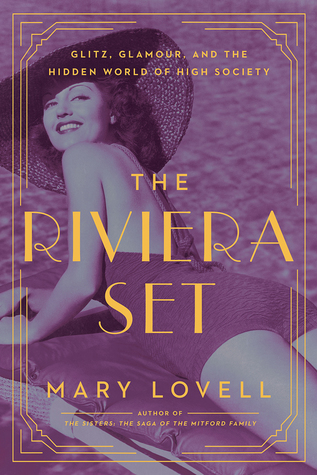
MISTRESSES of THE RIVIERA

Image result for riviera set book

MAXINE ELLIOT aspired to be the Mistress of King Edward VII 
and went on to own Chateau de l'Horizon.
I don't think that's her on the book cover.

The South of France.  To Americans who have never been there, we're talking about a long season of warm Mediterranean climate and the blue sea, a European vacation place that also boasts some year-long residents, and a history of intrigue and mistresses.  Mary Lovell's book, "The Riviera Set," focuses on those who peopled the French Riviera between 1930 and 1960 and one special white art-deco villa, owned by Maxine Elliot, an American stage actress turned society hostess.  Maxine Elliot first  married at 16 and then again.  She and her second husband were well known stage actors and she even made a couple silent films.  What she did best was invest wisely and well and rise up into English society. "Retired" from acting, Chateau de l'Horizon, which had been popular in the last decades of the 1800's with Russian and British royals, needed a rehab.  She gave it one. A summer holiday secret,  Maxine Elliot hosted Winston Churchill, Picasso, Scott and Zelda Fitzgerald, and the Duke and Duchess of Windsor, and so very many more.

Maxine herself set her sights on the Honorable George Keppel, youngest son of the 7th Earl of Albemarle and friend of the new King, Edward VII (a.k.a The Prince of Wales.).  She aimed for the heart of the royal set. Keppel had impeccable manners and charm but was always short on money. His wife, Alice, was the same age as Maxine and one of the foremost hostesses in England and a favorite mistress of the King. Let's note that this is the ancestor of Camilla Parker Bowles who proceeded her as a King's Mistress.  Maxine as "Miss Elliot," and only separated from her actor husband, Max, called upon Alice, and had her entrée into that set.

"I don't mind what she does," Keppel famously remarked about Alice, "as long as she comes back to me in the end."  It's safe to say that the Keppel marriage was an open one and each partner behaved with discretion. 

Maxine knew that back in the U.S.A, if a man who belonged to "The Four Hundred" called on a beautiful actress without a chaperone, there was only one outcome.  An actress who became the mistress of such a man was expected to be treated well, but this did not mean that she was included in the same social circles as his wife.  This social stigma was a fate she wished to avoid.

Maxine and Max's audiences considered them a romantic pair and it was career endangering to separate, but she was about 35, and said to be at the height of her luscious beauty.  Maxine became a bankable solo star, and in 1905 went to London where the King attended a performance.  In 1907 Max divorced her on grounds of desertion in Reno, Nevada.  The King had a posse of mistresses. Maxine noticed that she was never included in events that the King attended so she decided to go to Paris, buy a new wardrobe, and then see him around Marienbad, a spa in Germany.  She set herself outside just reading a book where the King and his friends would pass by as a strategy.  It worked.  The King wanted Mrs. Arthur James to include Maxine at dinner and Maxine dressed and waited for the invitation, which did not come.  The King insisted.  Mrs. Nate Goodwin (Maxine) received her invitation when a footman went across the courtyard to get her.  From then on Maxine was included in all the activities of the King's party.  Was she just a charming companion or another of the King's mistresses?  In 1909 the King made his move to be alone with her for the weekend with just him, his valet, and his equerry. She decided not to take the bait.  She wanted others present.  Some weeks went by and before anything more could happen, the King died.

The power of King's mistress Alice Keppel in society died with the King's death. The new King George didn't want her around.  But Maxine remained friends with Alice and the Keppels moved to Italy and were occasional guests of Maxine and their friends.  Maxine herself was not shunned by the new King George's court.  Winston and Clementine Churchill were friends.  The Duke of Rutland (including Lady Diana Manners) who were life long friends of Maxine's came.

Then when Maxine was 42 years old, she fell from Tony Wilding, a much younger tennis player who had became the 1920 singles champion.  She owned a house called Hartsbourne and there they played tennis together. She was happy with him as a companion and lover and he lived with her in his own rooms in the house. He was proud to know her and an all around nice man. After becoming a Wimbledon champion 1912 and 1913 the couple announced their engagement.  Tony would be her third, best marriage but it never happened.  He lost his nerve. World War I was brewing and Tony went to New York in 1914 and after winning four Wimbledon's lost.  Tony served Britain in France collecting intelligence but was eventually in the trenches on the front lines in the Royal Marines.  Tony was killed by the direct hit of a shell in May of 1915, and he would be the love of her life, the last big romance for Maxine.  Her friends said she was never the same.  She would outlive him by 25 years.  She lost her looks.

Maxine herself ran a private ambulance to take men to field hospitals in France, 1914. She'd hoped to see Tony around in France.  Her war work extended to taking food, clothing, blankets, and medicine her friends contributed.  She wrote letters that appeared in American newspapers about the horrors of war.  At 48, the distraught Maxine had gained 30 pounds, had dyed hair and a little facelift, and was going to psychics to communicate with Tony.  Continuing on as Maxine Elliot, she appeared from 1917-1920 on Broadway, toured the U.S.A., made silent films for Sam Goldwyn, met Charlie Chaplin.  By 1920 she was worth a million dollars and needed a 3rd act for her life.

The new Prince of Wales, who would go on to abdicate and marry Wallis SImpson, had Freda Dudley Ward as his mistress about 1921. She sold Hartsbourne and bout another house.  It was easier to climb socially after the war because so many people had been killed first by war, and then the Spanish Flu epidemic.  By 1924 Paris was about Isadora Duncan, Picasso, Hemingway, Elsa Maxwell - an American who threw parties for everyone and entertained, and the designer Jean Patou. CoCo Chanel was there and Hugh Grosvenor, 2nd Duke of Westminister, the richest man in the world fell for her. The two of them showed up after a vacation with tans at a time when women were still avoiding the sun.

So Maxine moved to the Riviera, personally unhurt by the stock market crash.  And she bought the property on the Golfe Juan, the bay between Antibes and Cannes.

I'll stop the story here, for we have the rest of this glorious month of August to go on about the chateau and the people who came to vacation or hide out.

If you're interested in learning more about some of the people who I've name dropped above, because they have been covered here in the past at MISTRESS MANIFESTO BLOGSPOT, please use the search feature embedded in the blog!  CoCo Chanel, Wallis Simpson,  Isadora Duncan have whole months, as does Camilla Parker Bowles!  Or you may just want to scan for Great Britain or France!

Missy

C 2018 All Rights Reserved  Mistress Manifesto BlogSpot


Wednesday, June 13, 2018

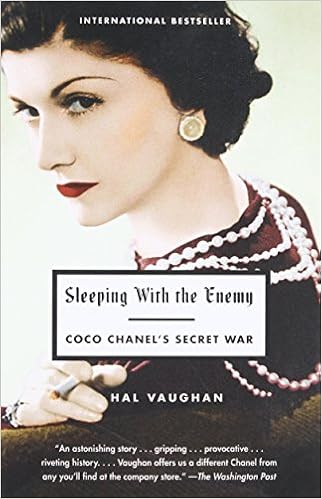
COCO and HER NAZI SPY LOVER BARON HANS GUNTHER VON DINCKLAGE


Image result for new book coco chanel  sleeping with the enemy


Coco and the Baron, who was called "Spatz," had a liaison of a decade duration and she seems to have chosen love over politics.


In 1944 when Paris was liberated the women who were known to have slept with Nazi/German soldiers during the time in which it was occupied were dragged through the streets, had their heads shaved to embarrass them, and worse.  Chanel was brought to the FFI headquarters for questioning but was released quickly, according the author Vaughan, due to the intercession of Winston Churchill.  She and Churchill had been friends for thirty years at that point, and he saved her from trial as a German collaborator. She was 61 to Dincklages' 48, and after the questioning she went to Switzerland, a neutral country, to meet up with him.


In 1946 the French Court of Justice issued a warrant to bring Chanel back to France for questioning, but not because of her Nazi spy lover.  This time she was accused of collaboration with a French traitor to give information to Germany military intelligence.  She denied all accusations and the author states that at that time the extent of her involvement was unknown, implying that if they had known she would not have been let to go.


Was the nickname CoCo based on  the French word Cocotte, for Kept Woman?  Well, she had been.  Born in 1883 as one of six children living in peasant poverty, by 1895 when her mother died and then abandoned by her father, she was raised by nuns where she learned discipline and frugality.  Her need to survive after leaving the nunnery lead her to singing in a cabaret to becoming,at 23, the Mistress of wealthy Etienne Balsan.  For three years she lived with him without marriage, learned to ride horses and the ways of the wealthy.  Following this relationship, CoCo spent eleven years with Arthur "Boy" Chapel beginning in 1908, so from approximately age 25 to age 36.  Neither man could or would marry her.  So no doubt CoCo had been a Kept Woman.


During the World War I era she lived in a Paris apartment.  Boy married (but still kept CoCo as a lover). He was the love of her life but as a result of his death in 1920 in a traffic accident she learned by the bequests in his will that he also had an Italian countess as a Mistress.  It is unstated in the book but clearly there was thus more to his choice of bride than class if he also kept an Italian countess!


CoCo had also made a best friend of Misia, Marie Sophie Olga Zenaide Godebska, who had come to London at 18 and had a series of trysts with older men.  Misia inherited a large sum of money at age 20.  These two bonded as unconventional artists and it is implied might have enjoyed a lesbian relationship or been two cougars out looking for men.
CoCo meanwhile had diversified.  Despite all her hard work, talent, and enterprise in fashion it took hiring a perfumer to invent for her approval and her own promotion a perfume, Chanel No. 5 to become a truly wealthy woman in her own right.  It was enough that in 1918 she paid 300,000 gold francs to buy her villa at Biarritz. By 1920 she had enough money to become a patron of the arts and to buy a house in Paris.


Her meeting with the Baron was likely at her Villa or nearby.  He had German aristocracy and military officers in his heritage and was against Communism.  He is said to have become a spy by 1919, the World War I era, long before World War II.  Spatz "used men and seduced women without mercy" He was "urbane and well mannered", multilingual, had a warm personality but was not an Aryan playboy. He wore the diplomats cloak of immunity.  No one was in physical danger around him. (chapter 2 page 32 of 112+)


Meanwhile, the author characterizes CoCo in the 1920's as always on the prowl for male conquests and lists them. One of them, poet Piere Rverdy, was one she loved and provided material assistance to so that he could go on writing.  He and CoCo had a "deep friendship" of 40 years.  She also had a liaison with Russian Grand Duke Dmitre Paulovich, a contender for the Russian throne, who, like other lovers, inspired her fashion designs, in his case her "Slavic Period."  He helped her launch Chanel No. 5 perfume in 1921 when it was promoted as the luxury perfume, with its very complicated formulation that included chemicals not from natural floral sources.  It was made by the Pierre Wertheimer Company in large enough batches to meet demand.  The author contends that she was nonchalant or reckless to do business with them or acting while in depression over the end of an affair... I bring this all up because while the question of CoCo Chanel as a woman living for love and around lovers rather than an astute business woman is suggested by the author, I see that she may actually have enjoyed multiple and ongoing relationships - been poly-amorous.  Was she aggressive and canny?  Simply determined to infiltrate society, even though rejected as a potential wife due to her birth as a peasant?  Bisexual or experimental?  Was her upset at the Wertheimer's unreasonable but attributed to "ant-Semitism"?  Her perfume was a worldly success but it was not until 20 years had gone by and the World War II era that she realized she'd been screwed by them and yes, once she got mad she would not stop saying so.
And now she was also supposed to be homophobic?
And a long time user of morphine?  Doping herself up to party?  While she had 300+ employees and a business to run - and save?


As previously stated, the condemnation of CoCo in this book made me question it as an unbalanced reportage determined to condemn her as a Nazi collaborator with the only excuse for her behavioir being her need for a man in her life.  However, would Winston Churchill, the man said to have been instrumental in Britain's involvement in the War and salvation of it, really have stuck his neck out to save her just because they were friends?  Is that something you would do for a friend if you knew they were going to be outed on the world stage for behavior acceptable at one time (at least among a minority) that is now not politically correct?
Many people in the 1930's and 1940's felt that Russian Communism was to be feared.  The Russian Revolution had left Europe scared. Other countries did not want a revolution or hordes overrunning their country on the way out of Communism.  In occupied countries during World War II, and probably every war that ever was, there were diverse opinions that went unspoken because people were just too afraid.  Just like in a typical corporation.
This book has left me wondering about all the women who are liberal Democrats in love with stalwart Republican men who basically avoid political discussions and focus on happy domesticity and the home as a refuge from the world.  It has also made me wonder if the long dead Chanel's company has been currently targeted by people who don't want Jewish women to buy the clothes or the perfume.


C 2018 Book Report/Review  Mistress Manifesto BlogSpot  All Rights Reserved.


Saturday, June 2, 2018

CO CO CHANEL - NAZI and SPY or SOCIETY WOMAN in LOVE?


Image result for new book coco chanel  sleeping with the enemy
*A version of the book is subtitled "Nazi Agent" Was her
"Secret War" to keep her business?
Gabriella "CoCo" Chanel
1882 - 1971

In June of 2011, I elected CoCo Chanel, as Mistress of the Month.  Here she is again, this time as a possible spy for Nazi Germany. She grew up in a convent where she'd been left as a child when her mother died by a father who didn't want his children.  Her way out of being the equivalent of a foster child who had to make it alone was to sing for her supper, and become a Mistress. Lovers financed her attempts at business, as a hat maker and then as a revolutionary and renown fashion designer who became wealthy from sales of her signature perfume Chanel  No. 5 and had over 2500 employees, mostly women, when the Nazis took over Paris.  She never had a marriage or children herself, but she was generous to her family, the education of her sister's children.  She also is known to have financed men she was interested in, having achieved independence and unusual success "for a woman."
Chanel succeeded through enterprise and creativity, and though she rose up in society to have both the exiled Duke of Windsor and his wife, the Duchess Wallis Simpson, and hero Winston Churchill as friends.
The author of this book, Hal Vaughan, exposes her relationship with spy Baron Hans Gunther Von Dincklage, called Spatz, and we wonder how much did she know. I don't believe she ever forgot what it was to be impoverished, orphaned, or living in the class system that made men choose more suitable well born women as wives.  But consider CoCo often said and was quoted as believing that it was essential for a woman to have a man in her life, to be in love, to love.  She had many disappointments and heartbreaks before she ever met Spatz, a charming younger man living in the South of France, with a half Jewish wife, who came across as more Upper Crust English than German.  She was in her fifties and he in his forties when they became involved.

As you may know from reading my blog, I read every book I feature from cover to cover, and in the last year or so have been reading some books as audio books. Doing so has opened the time I have to read and I especially love it when an author reads their own work.  However, I must tell you upfront that this book as an audio book was a total turn off.  The woman reader (Why when the author is a man?) had such condemnation of CoCo in her sneering attitude and intonations that I couldn't bear to continue to listen to her.  It gave the impression that this "International Best Seller" existed condemn and give an unbalanced account of CoCo.  I winced hearing this aggressively negative voice.
I decided to give reading the old fashioned text a try, and found this was a story that built and had much research to it.  But I was not swayed to the point that I might think that CoCo should have been tried as a war criminal just because while designing costumes very briefly in Hollywood in 1931 (including Gloria Swanson) that she noticed it was run by Jews. 

That Hollywood films were and are made by Jewish people, particular male studio heads was in fact true in her era (and still is dominated by Jewish people), and perhaps this truth spoken is misinterpreted as Anti-Semitism.  For if she really were, would she have lent her name?  Or is it being implied that she herself was just greedy and irresponsible to her contract? If she was truly anti-Semitic then she probably would have not accepted the commission from a Jewish studio boss. She was paid very well - a million - but didn't need the money. If truly anti-Semetic she probably would not have made a deal on her perfume with a Jewish company in the first place. (Her costumes were not successful and she considered Hollywood too glittery and false.)
Nor do I ever find convincing generalizations that Catholics and Christians were raised to believe that Jews killed Jesus.  I never heard that personally from any pulpit or in school or out of the mouth of anyone I knew; some people may have thought that but then they are ignorant of the Roman-occupied culture during Jesus' time.
That she felt ripped off by the Jewish-owned perfume company that made most of the profit on her perfume, is true.  She legally battled with them but eventually let them buy her out, so to speak.  She might have done so of any business partner. In a 1924 deal to have her perfume produced to meet great demand, she soon felt swindled and spent the next 25 years saying so, but her perfume is what provided her most of her wealth.
What I wanted was the cold hard facts of CoCo's involvement with Nazi's sans the Baron. Can be believe he admitted to her that he was a spy and asked her to work with him? That the Baron was a special man to her as a woman, that's where CoCo may have been played.  He was known to be a seducer.  He was there in the South of France to infiltrate society that lived there, as did CoCo live some of the time.  He was there to report on Naval operations. That was his secret job. Frankly if I knew someone had married a Jewish or half-Jewish woman I would not assume they were a Nazi.
It's also that she may have played him and others with one objective which may sound selfish, but that is to survive as her world crumbled around her, to continue her business that she had to shut down and leave, to keep her employees, to continue to help her family.  When she finally got out of Paris before the occupation, her employees mostly having fled to the countryside, people starving and in the streets, in bitter cold without heat, it was to her family that she fled.  So what if she could afford a chauffer and a Rolls Royce?  Wasn't she just as entitled to be afraid for her life?

And so if we focus on what the author dug up about the Baron, who was no doubt a spy for Nazi Germany, we can start there. 
In the 1930's CoCo was worth in today's money about $230 million dollars. In the mid 1930's Adolph Hitler's second in command, Joseph Goebbels - who controlled all media - approved Baron Hans Gunther Von Dincklage as a special attaché to the German Embassy in Paris.  French intelligence as well as Swiss intelligence was watching him.  He was part of a "cell" of several hundred Nazi intelligence people in France.  But intelligence may have been keeping an eye on the Baron while CoCo may have been one of many kept ignorant - at least for a while. The Baron's wealth was not close to hers.  He was set up and being paid by Germany.

In Paris the Ritz Hotel became an island of wealth where the elite people moved to live as if there were no war.  Chanel lived there as well as having a workspace and apartment across the street from the back door. The author makes the case that Chanel and some of her dear friends were morphine addicts for much of their lives, and that Chanel used the drug due to the depression she felt when yet another man she loved died suddenly - though this is repeated in the book as fact, it didn't seem to be substantiated, however, let's accept it and think "OK she had weaknesses."
During World War I, one tenth of French men died fighting.  No one wanted to believe another World War would begin but in 1939 when panic hit Paris, there were no taxis, no telephones, and 4 million French fled south, often on foot, ahead of the German army.  By then a lot of people were sorting through garbage cans outside of restaurants to solve their hunger pangs.

Dincklage divorced his wife Maximiliane a few months before the Nuremberg laws of 1934 deprived her of her citizenship.  No one knows for sure when Chanel met Dincklage, but he was married then and he did not divorce for CoCo but to be in compliance with the Nazi regime according to the author.  She testified when questioned after the war that they knew each other for 25 years.

The political and economic conditions in Europe had people choosing sides, even sides that were not winning. People thought that Communists, Socialists, and Fascists wanted to take over France.  Germany and England were not so much considered the enemy but Russians - Bolsheviks - many who were Jewish - were.  People feared a Russian Revolution scenario in France.  As a friend to the exiled Duke of Windsor, who had given up his Kingship for the woman he loved, his Mistress Wallis Simpson, CoCo had taken to meeting up with them and other friends in Switzerland.  Winston Churchill and his son Randolph were also visitors and friends - in England - and in France - and in Switzerland.  Hitler promised that he would reinstall the Duke of Windsor as the British King when Germany won the war.  The Duke and Duchess went to meet Hitler and famously photographed happily shaking hands. If you are social with such people, who are of a more elite status than you, would you follow their lead?
Seven years ago in June 2011 CoCo Chanel, the woman said to have been responsible for dramatically changing the fashion and style of womens' wear, was our Mistress of the Month.  You might want to go back to that month for an overall more balanced view.  As for other Nazi Mistresses, I spent a whole month on them in November 2017.
This book seems to make the case that CoCo was, rather than once in her twenties a love sick woman who struggled with the early limitations of desperate poverty, a more of an experienced and worldly Mistress of more men than previously revealed in films and books.  Throughout her adult life she had relationships, she loved, she was sexual. Her men were of various ethnic backgrounds that influenced her designs. Instead of thinking that the early heartbreaks left her focused only on designing clothes, and perfume, we can think of CoCo who was a woman of business with a sense of responsibility to her employees and family, not just herself. The most convincing part of the book is that she took a trip to Germany and indeed met a Nazi leader herself.


A little later in this month of posts, I'll write more about the relationship CoCo had with the Nazi Spy that I learned from this book.  I would like my readers to ask themselves if they have kept a relationship going with a man after learning something negative about how he conducts business or treats other people.

C 2018 Mistress Manifesto BlogSpot  All Rights Including International and Internet Rights Reserved.
Image result for public domain vintage France graphics fairy

Sunday, December 29, 2013

2013 YEAR IN REVIEW : THE POSTS MY READERS ARE READING

(I decided to review 2013 based on the information that Google Blogger provides about MISTRESS MANIFESTO BLOGSPOT!  Thanks to all my readers who make this a very successful blog!) 

I want to tell you what the most popular posts have been and where readers are coming from! 

Now, this doesn't mean that I'm overly swayed by what statistics have been.  I would probably go on posting even if I had very little readership because this is fun for me.

I know that Mistresses are a fascinating subject.  That's why there are so many books, movies, and television shows about Mistresses!  Fiction and Not!

Karin Stanford, who had a relationship and child with Jesse Jackson Senior, is the once-upon-a-time mistress who is still getting the most  hits!  She is a successful college professor with a career of her own.  I have no idea why!

Closely followed by a simple post called "Bob Hope's Girlfriends!  That tells me that I better dedicate a whole month to that subject.  (I've heard a lot about one of them, but you know there is a difference between a girlfriend, an affair, a fling, and a Mistress!) 

Scott Thorson, the ex of Liberace who wrote his memoir about being a Kept Man that has been turned into a respected movie called "Behind the Candelabra" is also of very much interest to my readers!  (I'm one of those people who has been rooting for Scott, and hoping he can overcome his addictions and win his bout with cancer too!  He's had a hard life.  My wish for him is peace of mind.)

Coco Chanel is also a long-time favorite!  I think that's in part because she managed to create a whole fashion house though coming from such adversity and changed women's fashion to something more comfortable and modern.

Where are my readers reading from? 

The United States overwhelmingly so.  The United Kingdom, Russia, and Germany are next, closely tied are Canada and France.  (I wish I knew if that was French Canada or not!) Latvia, for a small country, has checked in almost as much as Australia.  Maybe I better find out where all the Mistresses are hiding in that country! Denmark and Italy are less interested than I would imagine but still checking in quite a bit!

A few individuals are checking in from Qatar, Japan, and Singapore.  Maybe it's the write-ups I did on Jillian Lauren or Marilyn Young?

THANK YOU FOR READING MISTRESS MANIFESTO. BLOGSPOT.COM! 

Missy

Monday, December 2, 2013

YOUR WISH LIST AND YOUR NEW YEAR RESOLUTIONS ARE NOT SO DIFFERENT

I decided to go just get into the Holiday Season this month and not give it over to a Mistress or Mantress of the month.

Of course I've been considering who I'll be featuring in the coming year! 

Oh, I do hope I'll surprise you!

What a year it's been and I do so want to get cozy.  I feel like staying indoors and in bed to read good books and watch some movies I've missed.  I feel like filling my slow cooker with lots of veggies and some meat - just enough - and making a stew to come home to (have you ever tried pouring a can of beer into a slow cooker stew?), then go out, take a long walk alone in my coat, without money - just an ID and a few bucks in my pocket. Maybe I'll go shopping before the hustle bustle.  I feel like maybe a yoga class and later a long hot soak in the tub with some beautiful perfumed bath salts.

I'm getting ready for the New Year too!

I was going through my closet the other day, and putting some things I no longer wear in bags to be donated to charity.

Do you remember when you were a teenager and so sensitive to all the fads?  Of course you didn't think of them as fads!  You weren't posing!  Whatever it was - Preppie - Grunge - Punk - Starlet -  you actually were or aspiring to be exactly what your clothing said about you.  The music you listened to and the people you dated were part of that time in your life.

Then the years passed, you matured, and you found that  there were some things - clothes - people - that you gave away, and yet there are some things - people - that remain classic and dear to you. Finding your own style which will endure with you for years, maybe a favorite hair cut that plays up your best features, a color of lipstick that makes your teeth look brighter and your smile kissable, or a signature perfume that you never seem to tire of, has a comfort to it. (What is your favorite floral bouquet?  What's your taste in jewelry?) These are the things that, as gifts, are always appreciated. 

(Oh dear, what ever happened to my old friend who was gifted a massive life time supply of Georgio?)

CoCo Chanel said, "Style is being yourself on purpose!"

Of course Style seems to be most about Fashion, things that are most obvious to others when they first see you.  At least you hope you can be alluring enough that some people will want to get to know you better because personality counts too!. 

Having friends is important.  We are all in need of at least one Golden Friend who we can be ourselves with and really talk to and be understood by, someone we can Trust.  That isn't as easy as it used to be when we go through so many changes so rapidly.  We don't have the leisure we used to have and seem to rush through life, sometimes without reflection.  We tend to have friends who are with us only through college, or only while we live in a certain neighborhood, or only while we are married.

The holiday season with all it's distractions may not be the time to do serious soul searching or begin a radical diet, but my guess is that your Wish List and your New Year Resolutions are not so different.  It may begin with a Make-Over.  It could end with a New You by this time next year.

Missy


Tuesday, June 21, 2011

TO BE IRREPLACEABLE ONE MUST ALWAYS BE DIFFERENT : MADEMOISELLE COCO CHANEL


RebecaRazorzx is the creator of this video, a mini documentary with a commentary about the changes due to war that allowed women in the workplace and how Chanel's clothing designs allowed women more freedom of physical movement.
posted June 2021

Wednesday, June 15, 2011

COCO CHANEL Quote

"I imposed black. It's still going strong today, for black wipes out everything else around." Co Co Chanel

Thursday, June 9, 2011

COCO CHANEL and ETIENNE BALSAN and ARTHUR CAPEL


Gabrielle "CoCo" Chanel, was 25 years old, born in 1883 (or so), when Etienne Balsan took her as a mistress. He was a man of wealth who bred horses. Arthur Capel was her next lover...he died in 1919 and it broke her heart. THOSE ENTWINED C's that are on of her symbols are CHANEL and CAPEL... forever!

But CoCo did NOT live a life devoid of other friendships and lovers or good times just because she was an ambitious business woman too! And she remained chic until her death!

UPDATE  October 2016:  This is one of my most popular posts. Now that you are here, please check out some of the other Mistresses I've included in my blog!
You can look through the archive or use the search feature in this Google Blogger to find out more about the Mistresses in my Hall of Fame Not Shame!

Friday, June 3, 2011

COCO CHANEL : DESIGNER WHO CHANGED WOMENS FASHION GOT HER START AS A MISTRESS

CoCo Chanel, the fashion designer, is our mistress for the month of June 2011 and she's been our Mistress of the Month before. Why again? I Just finished reading a wonderful book about her called...

COCO CHANEL
The Legend and The Life
by Justine Picardie
which is published by itbooks An Imprint of HarperCollinsPublishers

BOOK REVIEW:

Justine Picardie has created a solid and invigorating book, packed with images, some in color - portraits, fashion, sketches, posters - which amplify the understanding of the poor born orphaned girl, who lived some unconventional years in the players palace of Royallieu, owned by Etienne Balsan, and then, through hard work and diligence, made it as a world famous fashion designer.


Did Balsan move the seamstress CoCo into his "decadent lifestyle", perhaps father a child or insist she have an abortion?


Certainly he was the person who first funded her ambitions to have a millinery shop, and then design clothes.

There were other women for him - and eventually other lovers also for her - In particular a man called Boy Chapel. Most intelligently CoCo and Etienne continued to be friends until he died in 1953. When she came to Royallieu he already had a mistress there, an actress and beauty known to be well kept by men, Emilienne d'Alecon. So perhaps the romance between them has been exaggerated.

Emilienne was 14 year older than CoCo, and perhaps if not her mentor, an example. She showed CoCo how to get along with and remain friends with ex lovers and providers. (We see this characteristic also in mistress Pamela Digby Churchill Harriman.)

Blurring the possibility that she may have given birth to a son, CoCo apparently embroidered stories and cut out truths, and perhaps this was not lying so much as self preservation and promoting a reality she could deal with. Perhaps she spoke of the conclusions she had come to in making sense of her life.

She blurred her birth date, and how old she was at various experiences in her life, taking the "I am a little girl" perspective, claiming in later years to have been 16 (innocent) rather than in her twenties, when at Royallieu. In this account she was more of an observer than a participant, and so how could she be very heartbroken?

Why is all this important? Because Chanel did much to change women's lifestyles by giving them comfortable clothing that allowed them to move freely and be free.

And while, in past bios, much has been made of how CLASS played a role in preventing an aristocrat from marrying a girl of her working poor background, reading this, I feel Chanel learned some valuable lessons and accepting her station in life, if not a wife, did the extraordinary for a woman of those times coming out of nowhere.

One wonders if perhaps, living in a nunnery- orphanage, turned Coco out to be an unconventional woman, who maybe did not want children or did not want marriage.

Certainly marriage eluded her.

But she was driven and ambitious!

This book also tells about the business deals she made and regretted, and how she fought to get back (her perfumes). She was not waiting on a man to do any of these things for her. She made others wealthier than she was. She was also generous and willing to mentor, champion, or keep, younger men and friends, while cutting some family and aiding others.

C 2011 Missy Rapport/ Mistress Manifesto All Rights Reserved including Internet and International Rights

Sunday, February 21, 2010

LADY and GENTLEMAN CIRCA LATE 19th century

The late 19th century - over 100 years ago - was a time in which mistresses were understood to be part of life in the upper classes of Europe and America. But it would be another few decades until CoCo Chanel became the mistress of a man who would fund her shop and clothing line.